by Michael Fouts, RD | May 1, 2026
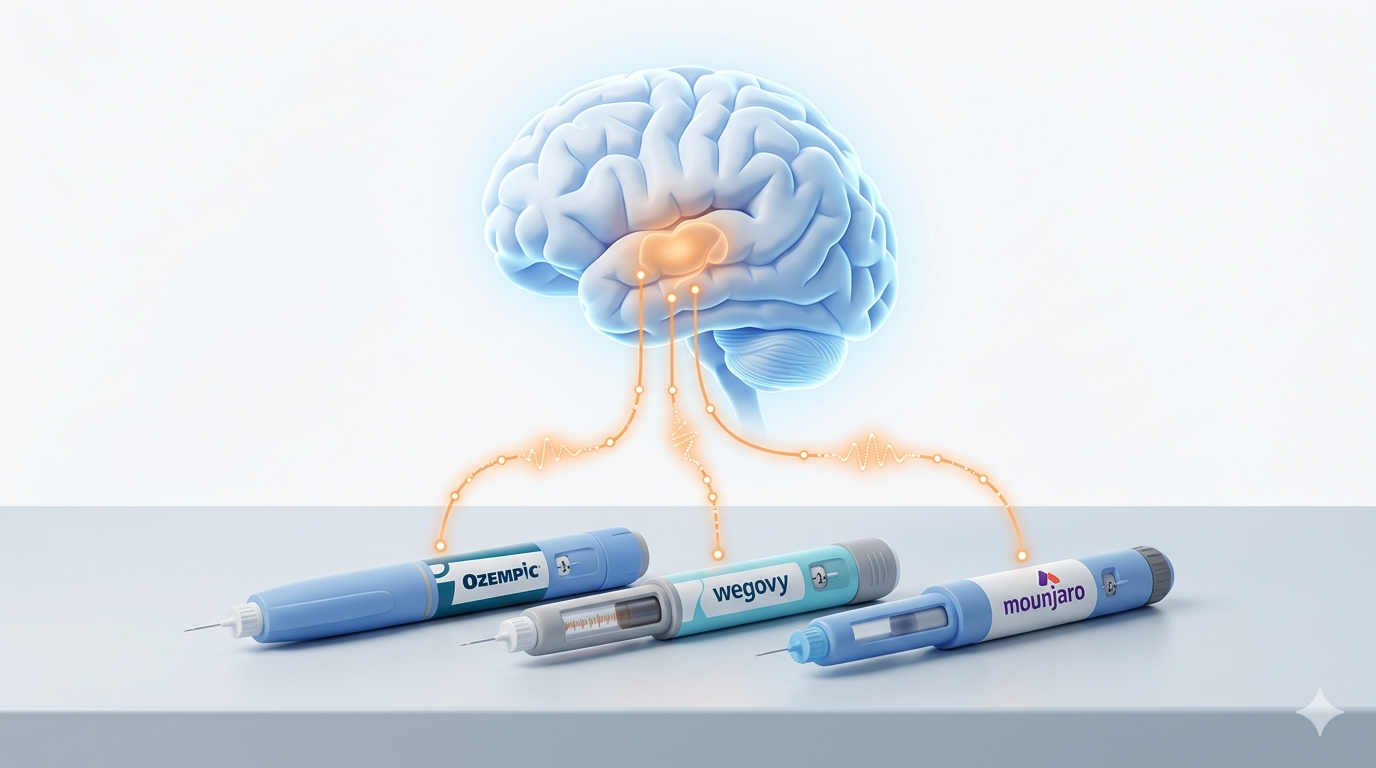
Today, we’re diving into what GLP‑1 medications—like Ozempic, Wegovy, Mounjaro, and Zepbound—are really doing for fat‑loss and overall well‑being, what science says, and how generics coming soon could shift access for many.
1. Better Understanding GLP‑1, GIP & Glucagon Receptor Effects
First let’s talk about the science that fuels these medications—and why it’s so important to your fat‑loss journey.
-
GLP‑1 (Glucagon‑like peptide‑1): A hormone released from the gut after eating. It boosts insulin output when glucose is high, slows stomach emptying, reduces glucagon (which typically raises blood sugar), and signals your brain to slow down food intake and feel fuller faster.
-
GIP (Glucose‑dependent insulinotropic polypeptide): Another hormone that encourages insulin release after a meal and helps clear fats from circulation.
-
Glucagon receptor activation: Glucagon normally raises blood sugar by prompting the liver to make more glucose. But in the right context, a low dose boosts metabolism, encouraging fat breakdown and calorie burn—even while helping to curb appetite when combined with GLP‑1/GIP signals.
Now imagine a single medication that targets just one receptor—that’s powerful. But what if you could engage two or even three? That’s where the latest weight‑loss drugs enter the ring. For the below – agonist = activates the receptor.
-
GLP‑1 agonists (like Ozempic, Wegovy) primarily tackle appetite and improve blood sugar.
-
Dual agonists (like Mounjaro, Zepbound) harness both GLP‑1 + GIP—ramping up insulin support and fat metabolism.
-
Triple agonists (like retatrutide – as of the time of this blog post this drug is not commercially available yet) GLP-1 + GIP + glucagon receptor activation = turning down the volume on hunger and turning up the flame on fat burning.
2. The Heavy‑Hitters: Ozempic, Wegovy, Mounjaro & Zepbound
Ozempic & Wegovy
Both contain semaglutide, a GLP‑1 receptor agonist. Ozempic is prescribed for type 2 diabetes; Wegovy is its cousin—specifically labeled for weight‑loss and long‑term weight maintenance.
Mounjaro & Zepbound
These are built on tirzepatide, a dual GIP/GLP‑1 agonist (fancier, combo‑style hormone mimicry). Mounjaro helps with diabetes control, while Zepbound is approved for weight management—and even obstructive sleep apnea in some cases.
Upcoming: Retatrutide
Retatrutide will be the first triple agonist, consistent of GLP‑1, GIP, and glucagon receptor effects. As mentioned earlier, this not only helps curb hunge but it also boosts how many calories your body burns.
3. The Patent Game-Changer in Canada
In Canada, Novo Nordisk (a company that makes semaglutide) lost its semaglutide patent because of a missed ~$250 maintenance fee—a tiny oversight with huge consequences. That lapse has already opened the door for generic semaglutide in Canada, and even inspired talk of import programs that could benefit U.S. patients.
Canada’s generic drug maker Sandoz is even positioning to slash prices by up to 70% once generics begin, potentially bringing monthly costs down to ~$40‑50 CAD instead of $200‑400 CAD.
This unforeseen development means these tools might soon be more affordable and accessible.
4. The Balance: A Dietitian’s Informed, Honest Approach
As an RD, here’s what I want you to know:
- These weight loss medications are powerful tools—especially for those struggling with stubborn weight, metabolic health, or who struggle with “food noise” despite eating healthy.
- These meds should not be thought of as magic bullets. They should be used on top of good habits – nutrition, exercise, sleep, etc.
- With any drug, there is always the possibility of side effects—namely nausea, constipation, and fatigue. I’ve had clients that have started the medications but decided to stop becuase the side effects were just not worth it (I’ve also had clients that have had no side effects).
- Generics are coming —and that will reshape access and equity in healthcare for many.
- Retatrutide might be a game‑changer. Early research is showing that is may spare muscle while burning fat—and even improve liver health; but, safety data is still emerging.
FYI: Who Makes These Drugs—and Why It Matters
-
Novo Nordisk (company based out of Denmark) produces Ozempic and Wegovy. They poured billions into R&D, aiming to recoup costs before generics arrive—but the Canadian oversight may upend that plan.
-
Eli Lilly (company based out of United States) makes Mounjaro and Zepbound (and upcoming Retatrutide). Their CEO points to the $3 billion and 15 years needed to develop these drugs to justify pricing—but they also face the reality of generics challenging affordability.
There’s a tension here: innovation needs rewards, but public health demands access. That’s why generics—when we can safely use them—can be a turning point from hype to real health equity.
hanks for reading. Here are some other ways we can help:
Social Media: Instagram I Youtube I Facebook
by Michael Fouts, RD | Apr 25, 2026
An avocado chicken salad that earns its hype on the macros alone — avocado handles both the fat and fibre, Greek yogurt brings a creamy tang with a protein boost, and it all comes together in under 20 minutes. The detail that makes it: warm chicken straight from the pan over the cold salad. Clean, simple, and genuinely satisfying.
Nutrition Per Serving
Calories: 500 cal | Protein: 47g | Carbs: 26g | Fat: 25g | Fibre: 10g
Makes 1 serving.
Ingredients
- 150g chicken breast
- 100g avocado, sliced or cubed
- 250g cucumber, chopped
- ½ red onion, thinly sliced
- 100g 0% Greek yogurt
- Juice of ½ lemon
- Chilli flakes, to taste (optional)
- Salt and pepper, to taste
Instructions
1. Cook the Chicken
Season the chicken breast with salt, pepper, and chilli flakes if using. Air fry or pan fry for approximately 15 minutes until cooked through and lightly golden. Slice or shred while still warm.
2. Prep the Salad
Chop the cucumber, slice the red onion, and cube or slice the avocado. Add to a bowl along with the Greek yogurt and lemon juice.
3. Combine and Serve
Add the warm chicken to the bowl and toss everything together until well combined. Taste and adjust seasoning. Serve immediately — the contrast of warm chicken with the cool, creamy salad is the best part.
Dietitian Tips
- Avocado as a fat source is a strong choice. Unlike most salad dressings, avocado brings 7–8g of fibre alongside the fat, plus folate and B vitamins. You’re getting a full nutrient package, not just calories.
- Greek yogurt pulls double duty. It acts as the dressing base while adding protein and keeping the fat low. Full-fat Greek yogurt adds another ~5g of fat per serving if you want a richer texture.
- Scales well for meal prep. This is written as a single serving, but it multiplies easily — cook 4–5 chicken breasts at once and store the salad components separately. Assemble fresh each day so the avocado doesn’t brown and the cucumber stays crisp.
Want more recipes like this?
Explore the Resources page for nutrition guides, meal planning tips, and more high-protein ideas to fuel your goals.
Leverage Nutrition clients get access to the full Recipe Selector — a personalized tool that filters recipes by your macros, preferences, and goals. Learn more about working with Michael →
by Michael Fouts, RD | Apr 25, 2026
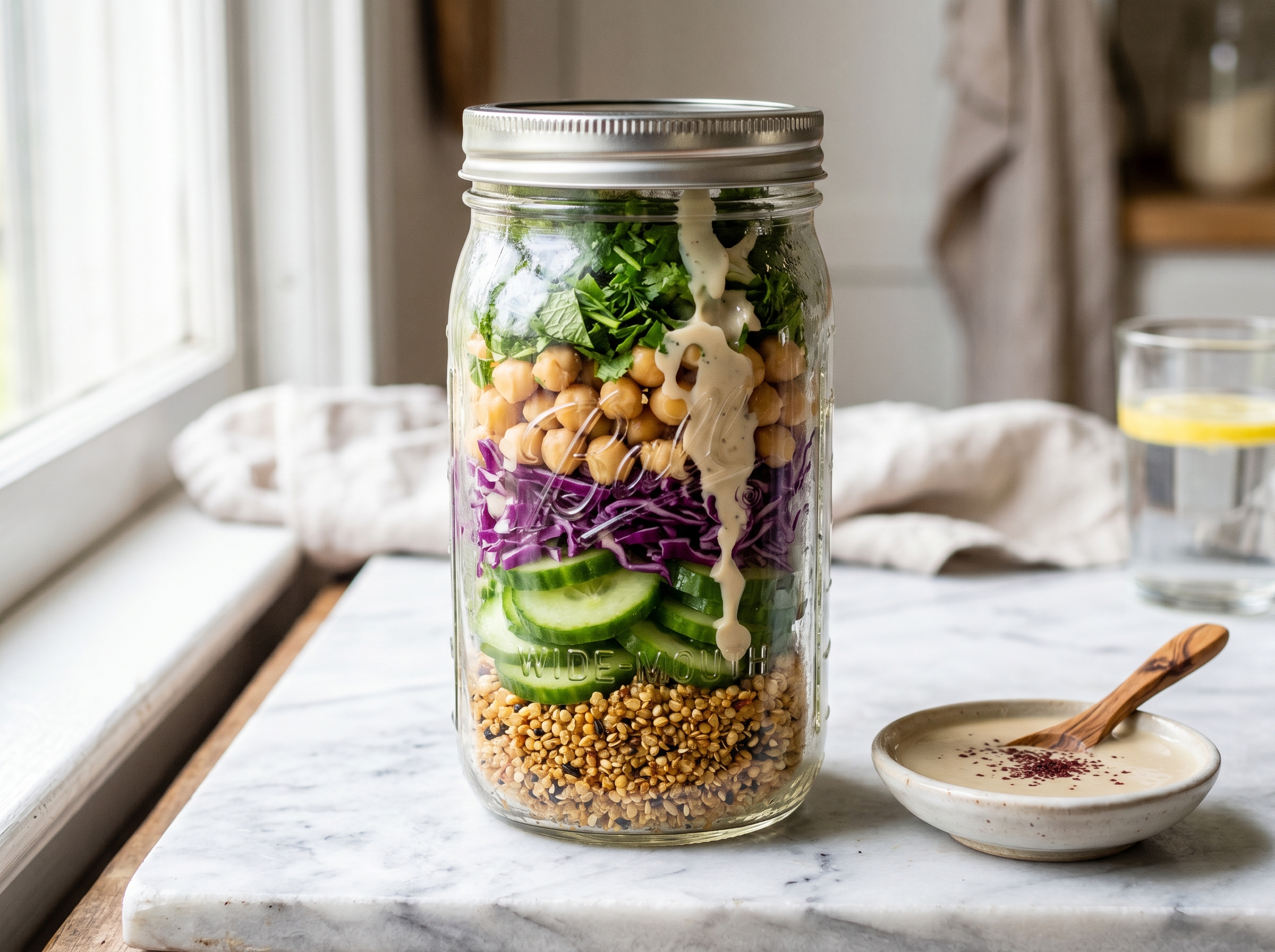
A meal-prep salad jar that actually earns its hype. Crispy baked quinoa adds a satisfying crunch on top of chickpeas, cucumber, fresh mint and parsley, creamy pressed cottage cheese, and crushed pistachios — all tied together with a tahini balsamic dressing that’s equal parts tangy and rich. High in fibre, balanced in macros, and holds up well in the fridge for 3–4 days of easy weekday lunches.
Nutrition Per Serving
Calories: 700 cal | Protein: 26g | Carbs: 70g | Fat: 34g | Fibre: 12g
Makes 3 jars.
Ingredients
Per Jar (×3)
- ½ cup cucumber, chopped
- ⅛ cup red onion, chopped
- ½ cup chickpeas (canned, drained and rinsed)
- ¼ cup fresh mint, chopped
- ¼ cup fresh parsley, chopped
- ¼ cup cottage cheese
- ⅛ cup crushed pistachios
- ½ cup crispy quinoa (see step 1)
- Tahini Balsamic Dressing (makes 3 servings)
- 3 tbsp extra-virgin olive oil
- 3 tbsp tahini
- 3 tbsp balsamic vinegar
- Juice of 1 lemon
- 2 tbsp maple syrup
- 1 tsp garlic powder
- Salt and pepper, to taste
Instructions
1. Make the Crispy Quinoa
Cook quinoa according to package directions, then spread it in a thin, even layer on a lined baking sheet. Toss with a drizzle of avocado oil, then bake at 450°F (230°C) for approximately 15 minutes, stirring halfway, until golden and crispy. Let cool completely before using — it will crisp up further as it cools.
2. Make the Dressing
Whisk together the olive oil, tahini, balsamic vinegar, lemon juice, maple syrup, garlic powder, salt, and pepper until smooth. Taste and adjust seasoning as needed. The dressing will thicken slightly as it sits — thin with a splash of water if needed.
3. Prep the Salad Ingredients
Chop the cucumber, red onion, mint, and parsley. Drain and rinse the chickpeas. Crush the pistachios roughly.
4. Assemble the Jars
Divide the dressing evenly among 3 jars (about 2–3 tbsp per jar). Layer in the chickpeas and cucumber, then red onion, herbs, and cottage cheese. Top with the crispy quinoa and crushed pistachios just before eating to keep them crunchy. Seal and refrigerate for up to 3–4 days.
Dietitian Tips
- Make a big batch of crispy quinoa. Double or triple the amount and store it in an airtight container at room temperature — it stays crispy for up to a week and works beautifully on other salads, grain bowls, and soups.
- Layer strategically for meal prep. Dressing goes at the bottom, followed by hearty ingredients (chickpeas, cucumber, onion), then herbs and cottage cheese, with crispy quinoa and pistachios on top. This prevents sogginess and keeps the textures intact through the week.
Want more recipes like this?
Explore the Resources page for nutrition guides, meal planning tips, and more high-protein ideas to fuel your goals.
Leverage Nutrition clients get access to the full Recipe Selector — a personalized tool that filters recipes by your macros, preferences, and goals. Learn more about working with Michael →
by Michael Fouts, RD | Apr 11, 2026
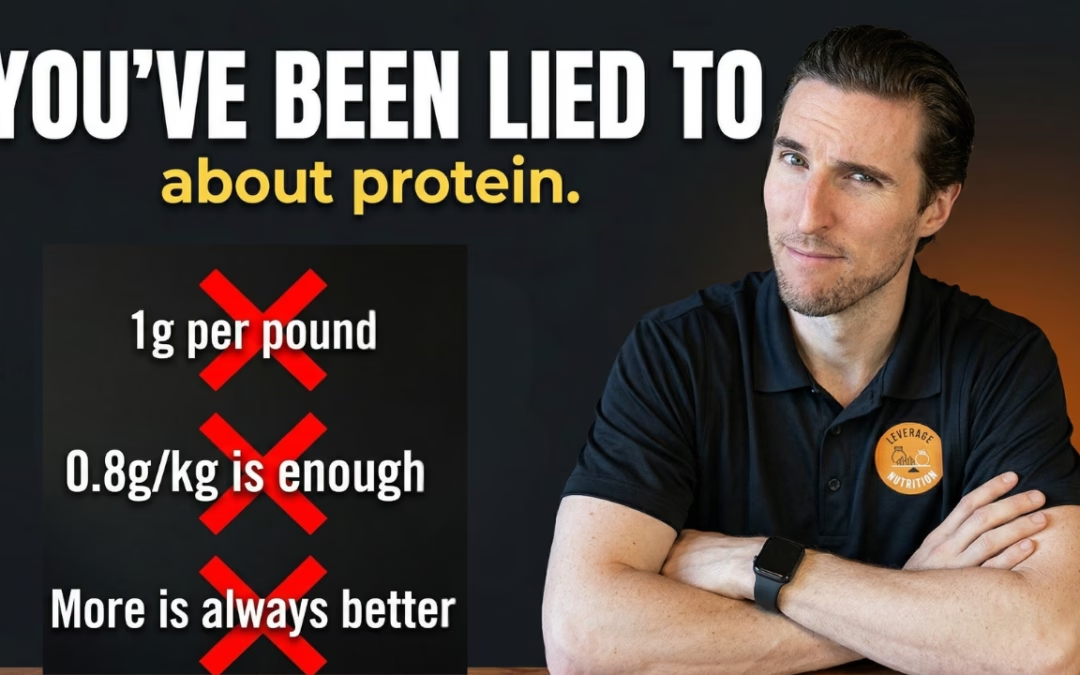
If you’ve spent any time searching for protein advice online, you’ve probably encountered wildly conflicting information. One source says 50 grams daily is plenty; another insists you need your body weight in grams. The truth? Both are likely wrong — and the answer depends entirely on your goals, age, and activity level. Let’s cut through the noise and answer the question: how much protein do you actually need?
The RDA Is a Floor, Not a Target
The current Recommended Dietary Allowance (RDA) of 0.8 grams per kilogram of body weight has been around for over 70 years. As Mike explains in his breakdown at 0:35, this number was established using nitrogen balance studies and was designed to prevent deficiency — not to optimise health, muscle retention, or performance.
Think of it this way: eating 0.8 g/kg is like putting the bare minimum fuel in your car and calling it a full tank. You’ll technically run, but you’re nowhere near operating at your best. The foundation versus house analogy at 1:15 makes this crystal clear — the RDA is your foundation, but the house (optimal intake) requires considerably more building material.
In January 2026, the US Dietary Guidelines finally acknowledged this gap, raising protein recommendations to 1.2–1.6 g/kg — nearly double the old standard. While researchers at Stanford and Harvard have pushed back on the exact magnitude of the increase, the direction is undeniably correct: most people benefit from eating more protein than the outdated RDA suggests.
How Much Protein Do You Actually Need? The Slider Model
Rather than giving everyone the same number, think of your protein needs as a slider that adjusts based on your circumstances. Mike introduces this framework at 2:38, and it’s genuinely practical for figuring out where you fall.
Here’s how the slider works:
- Baseline (active adult): 1.2 g/kg — your starting point if you’re moderately active with no specific physique goals
- Endurance athletes: 1.2–1.4 g/kg — amino acids get burned as fuel during prolonged cardio
- Strength and power athletes: 1.6–2.2 g/kg — more muscle breakdown means more rebuilding required
- Fat loss: 1.8–2.8 g/kg — as explained at 3:47, higher protein intake dramatically improves hunger management and satiety without relying on willpower
- Pregnant or lactating: 1.5–1.9 g/kg — rapid tissue growth creates substantial physiological demand
- Older adults (55–60+): above 1.2 g/kg — anabolic resistance means protein receptors become less sensitive with age, requiring higher intake per meal to trigger the same muscle-building response
For someone pursuing fat loss while preserving muscle, this often means eating 1.8–2.8 g/kg. That’s substantially higher than what most Canadians consume — but the evidence supporting this range for body composition goals is robust.
Distribution Matters More Than Total Intake
Here’s where many people go wrong: they focus on hitting a daily protein number while ignoring how that protein is distributed throughout the day. Muscle protein synthesis doesn’t run continuously — it pulses, peaks, and resets over approximately three hours, as Mike explains at 6:56.
This has massive practical implications. If you eat 90 grams of protein in one sitting, you trigger one pulse of muscle protein synthesis. Split that same 90 grams across three meals, and you trigger three pulses. The excess protein from that single large meal doesn’t get stored for later muscle building — it gets oxidised and burned for energy.
The practical target? Aim for 30–40 grams of protein per meal, spread across 3–4 eating occasions daily. This distribution maximises the muscle-building signal from every gram you consume. At Leverage Nutrition, this is one of the first adjustments we help clients make — often with noticeable improvements in satiety and body composition within weeks.
Debunking the Protein Myths
Two persistent myths continue to make people hesitant about increasing their protein intake. Let’s address both with actual evidence.
Myth 1: Protein damages your kidneys. At 7:42, Mike references meta-analyses of healthy individuals consuming up to 3.3 g/kg that found zero evidence of kidney damage. Healthy kidneys adapt to higher protein loads without issue. The important caveat: people with existing chronic kidney disease should indeed limit protein under medical guidance — but that’s a very different population.
Myth 2: Protein leeches calcium from bones. This misconception arose from older research that measured urinary calcium excretion after high-protein meals and assumed the calcium came from bones. Direct bone density studies at 8:16 tell a completely different story: higher protein intake actually increases bone density. The calcium in urine came from improved gut absorption, not bone degradation.
Resistance Training Is the Cake — Protein Is Just Frosting
Perhaps the most important point comes near the end of the video. At 8:46, Mike references Stanford Medicine’s March 2026 position: protein quantity is only a thin layer of frosting on top of what actually drives muscle preservation and metabolic health — lifting weights.
In a calorie deficit, resistance training is the only exercise modality that consistently produces fat loss without muscle loss. You can eat 160 grams of protein daily and still lose muscle if you’re not giving that protein a reason to be used. The stimulus from resistance training signals your body to preserve and build muscle tissue; protein provides the raw materials to make that happen.
This doesn’t mean protein is unimportant — it absolutely matters. But optimising your protein intake while neglecting strength training is like perfecting your frosting recipe when you haven’t baked the cake.
The Bottom Line
How much protein do you actually need? More than the 0.8 g/kg RDA, but the exact amount depends on your goals. For most active Canadians, 1.2 g/kg is a reasonable baseline. If you’re focused on fat loss or building muscle, slide that number up toward 1.6–2.2 g/kg or even higher during aggressive dieting phases.
Remember the three key takeaways: distribute your protein across 3–4 meals rather than loading it into one; aim for at least 30 grams per meal to cross the muscle protein synthesis threshold; and recalculate your target dynamically as your age, activity level, and life stage change. Most importantly, pair adequate protein with consistent resistance training — because without the stimulus, even optimal protein intake won’t preserve your muscle.
Want personalised guidance on dialling in your protein intake for your specific goals? Learn more about evidence-based nutrition coaching at Leverage Nutrition.
Thanks for reading. Here are some other ways we can help:
Social Media: Instagram I Youtube I Facebook
by Michael Fouts, RD | Apr 11, 2026
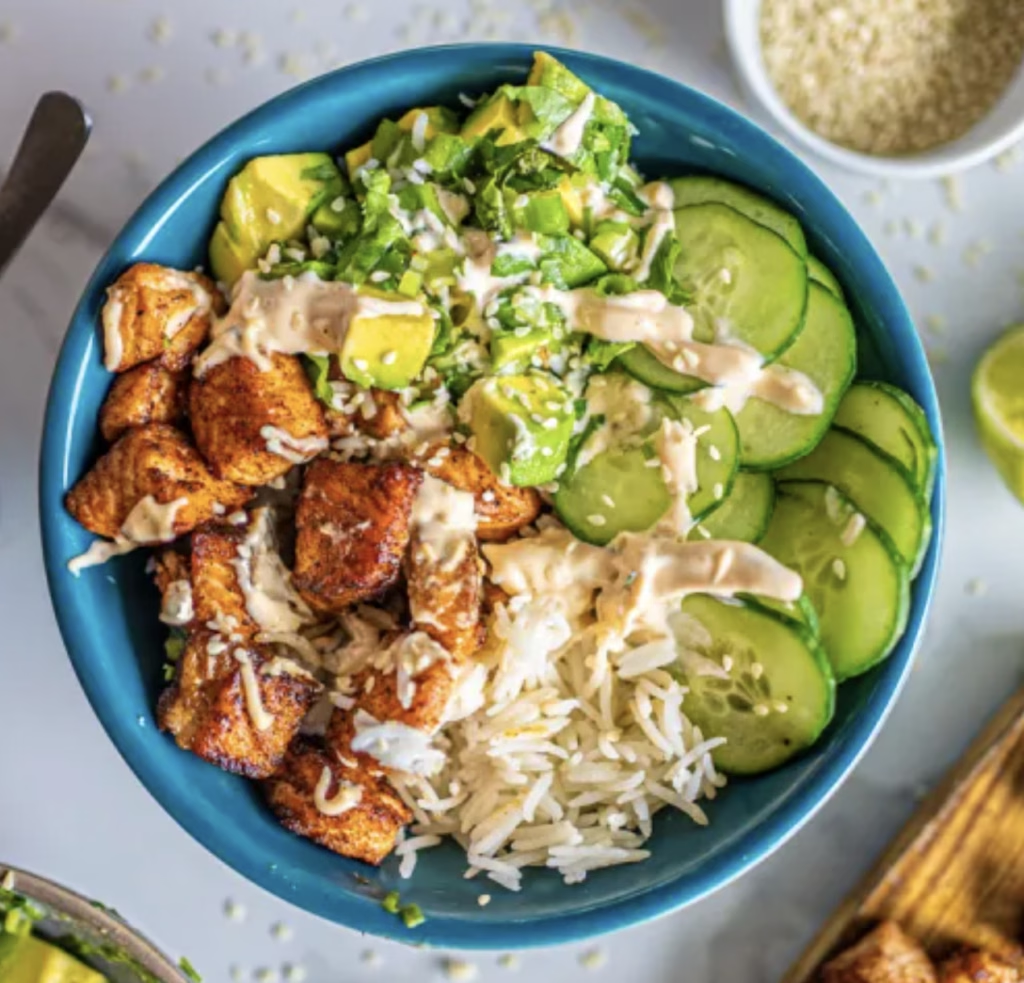
This crispy spicy salmon rice bowl is the ultimate high-protein lunch that comes together in under 30 minutes. The combination of flaky salmon in a sweet-spicy glaze, creamy garlic mayo sauce, and fresh vegetables over perfectly cooked rice makes this one of the most satisfying weekday meals you can make.
Nutrition Per Serving
Calories: 498 | Protein: 28g | Carbs: 51g | Fat: 20g
Makes 2 servings.
Ingredients
- 250g microwave basmati rice
- 2 boneless salmon fillets
- 2 heaped tbsp Nando’s medium garlic mayo
- 2 tbsp mayonnaise (light mayo works great)
- 3 tbsp sweet chilli sauce
- 1 medium carrot, grated or julienned
- 1/4 cucumber, thinly sliced
- 2 tbsp dark soy sauce
- 1 tbsp honey
- 1/2 tsp chilli powder
- Pinch of chilli flakes
- Salt and pepper, to taste
- Sesame seeds, to garnish
Instructions
1. Make the Sauce
In a small bowl, whisk together the dark soy sauce, honey, sweet chilli sauce, and chilli powder until combined. Set aside. In a separate bowl, mix the Nando’s garlic mayo and regular mayonnaise together to make your creamy drizzle.
2. Cook the Salmon
Pat your salmon fillets dry with a paper towel and season with salt, pepper, and a pinch of chilli flakes. Heat a non-stick skillet over medium-high heat with a small splash of oil. Place the salmon skin-side down and cook for 3–4 minutes until the skin is crispy. Flip and cook for another 2–3 minutes. Pour the soy-honey-chilli sauce over the salmon in the pan and cook for another 1–2 minutes, spooning the sauce over the fillets as it thickens and caramelises. Remove from heat and flake into large chunks.
3. Prepare the Vegetables
While the salmon cooks, grate or julienne the carrot and thinly slice the cucumber. Set aside.
4. Heat the Rice
Microwave the basmati rice according to package instructions (typically 2 minutes). Fluff with a fork.
5. Assemble the Bowls
Divide the rice between two bowls. Arrange the glazed salmon, grated carrot, and sliced cucumber over top. Drizzle generously with the garlic mayo mixture. Finish with a pinch of chilli flakes and sesame seeds.
Dietitian Tips
- Boost the protein further by adding edamame or a soft-boiled egg alongside the salmon.
- Lower the fat by using half the mayo and adding extra sweet chilli sauce for flavour.
- Meal prep friendly — store components separately and assemble fresh. Salmon keeps well in the fridge for up to 2 days.
- Salmon is an excellent source of omega-3 fatty acids alongside its protein content, making this bowl a genuinely well-rounded meal — not just a calorie-counted one.