by Michael Fouts, RD | May 12, 2026

You used to be able to tighten things up with a few weeks of cleaner eating and a bit more movement. Now you’re doing more than you ever have, eating less than you ever have, and your body just isn’t responding the same way. If fat loss in perimenopause and menopause feels impossibly hard, you’re not imagining it — and you’re certainly not failing. Your biology has changed, and the strategies you relied on haven’t caught up.
What Perimenopause and Menopause Actually Mean for Your Metabolism
Perimenopause is the transitional phase before menopause, typically beginning in the early-to-mid 40s — though it can start as early as the late 30s. It’s characterised by fluctuating and declining oestrogen levels, irregular cycles, and a wide range of symptoms that vary significantly from person to person. Menopause is defined as 12 consecutive months without a menstrual period, with the average age in Canada being 51.
The hormonal changes driving the symptoms you feel — hot flashes, sleep disruption, mood changes, shifts in body composition — begin years before menopause is official. And they have a direct, measurable impact on how your body stores fat, builds muscle, and responds to diet and exercise.
What Declining Oestrogen Does to Fat Loss
Oestrogen doesn’t just regulate your menstrual cycle. It plays a significant role in metabolic health, and its decline creates a cascade of changes that directly affect body composition.
Insulin sensitivity decreases. Oestrogen helps your cells respond to insulin effectively. As it declines, insulin resistance becomes more common — even in women who have never had blood sugar issues. As covered in our post on why eating less stops working, this creates a hormonal environment that prioritises fat storage over fat burning, even in a calorie deficit.
Fat distribution shifts. Pre-menopause, oestrogen directs fat storage toward the hips and thighs. As oestrogen declines, fat redistributes toward the abdomen and internal organs. This visceral fat is more metabolically active, more inflammatory, and more associated with cardiovascular and metabolic disease risk.
Muscle mass declines faster. Oestrogen has a protective effect on muscle tissue. Its decline accelerates the natural age-related muscle loss that begins in your 30s. Less muscle means a lower resting metabolism — your body burns fewer calories at rest, making fat loss progressively harder.
Sleep quality deteriorates. Night sweats, hot flashes, and hormonal fluctuations disrupt sleep directly. Poor sleep elevates cortisol, increases hunger hormones, suppresses satiety signals, and worsens insulin sensitivity. It’s a compounding cycle that makes every other aspect of fat loss harder.
Alcohol tolerance shifts. This one rarely makes it into nutrition articles, but it’s worth naming directly. Alcohol disrupts sleep architecture, elevates cortisol, worsens insulin sensitivity, and is increasingly used as a stress and sleep coping tool during this life stage — often without recognition of how significantly it compounds every mechanism described above. If alcohol is a regular feature of your evenings, it’s worth an honest conversation with your dietitian about its role in your current picture.
Why the Old Approach Stops Working
Most fat loss strategies are designed around a younger hormonal profile. They assume a level of insulin sensitivity, muscle preservation, and appetite regulation that changes significantly in perimenopause. The classic “eat less, do more cardio” approach becomes progressively counterproductive.
More cardio increases cortisol. For women already dealing with disrupted sleep, elevated baseline stress, and declining oestrogen, adding more cardio load increases cortisol further, worsens insulin resistance, and accelerates muscle loss. The body responds by holding onto fat — particularly abdominal fat — as a protective response.
Aggressive calorie restriction worsens metabolic adaptation. Your metabolism already slows in response to restriction. In perimenopause, this adaptation happens faster and more aggressively. Very low calorie diets in this hormonal context also accelerate bone density loss — a significant long-term health concern.
The result is a woman working harder than ever, eating less than ever, and seeing worse results than ever — while being told to just try harder. This isn’t a willpower problem. It’s a mismatch between strategy and biology.
The Cortisol Factor: Why Stress Management Matters More Now
The perimenopausal and menopausal years often coincide with significant life stressors — career demands, aging parents, children leaving home. The physiological stress of hormonal fluctuation itself also elevates cortisol. Chronically elevated cortisol directly promotes abdominal fat storage, worsens insulin resistance, further disrupts sleep, and breaks down muscle tissue.
This is why stress management — often dismissed as a soft recommendation — is actually a core clinical lever for body composition at this life stage. It’s not optional context. It’s part of the strategy.
What Actually Works for Fat Loss in Perimenopause and Menopause
The approach that works looks meaningfully different from standard calorie restriction advice. Here’s what the evidence supports:
- Prioritise resistance training over cardio. Strength training is the single most important exercise modality at this stage. It preserves and builds muscle mass, directly improves insulin sensitivity, supports bone density, and increases resting metabolism. Aim for at least 3 sessions per week with progressive overload.
- Increase protein significantly. Protein requirements increase with age. Higher protein intake (1.6–2.2g per kilogram of body weight) helps offset accelerated muscle loss. Most women we see in clinic are getting half of what they actually need. Hitting this target typically requires a deliberate protein anchor at every meal — 30–40g per sitting — rather than concentrating it in one or two meals.
- Don’t aggressively restrict calories. A modest deficit of 200–300 calories per day is appropriate. Larger deficits accelerate muscle loss, worsen metabolic adaptation, and increase cortisol. Aim for 0.25–0.5kg per week of loss — slow, sustainable progress that preserves muscle.
- Address sleep as a clinical priority. Poor sleep directly undermines every other intervention. If night sweats, hot flashes, or insomnia are significantly disrupting your sleep, this needs to be addressed — whether through lifestyle strategies, targeted supplementation, or a conversation with your GP about medical support. This is not a secondary concern.
- Focus on anti-inflammatory foods. Prioritise omega-3 fatty acids (fatty fish, flaxseed, walnuts), soluble fibre (oats, legumes, vegetables), and adequate calcium and vitamin D. Minimise ultra-processed foods and reduce saturated fat to support both cardiovascular health and insulin sensitivity.
- Consider a conversation about hormone therapy. This is a medical decision — outside the scope of nutrition counselling — but for many women, hormone therapy meaningfully reduces the metabolic and body composition effects of oestrogen decline. If you haven’t had this conversation with your GP or gynaecologist, it may be worth initiating.
What to Track Instead of the Scale
The scale is particularly unreliable during perimenopause due to hormonal water retention, muscle gain from resistance training, and shifts in fat distribution. Progress at this stage often looks different from what you’re used to — a 2kg gain on the scale can mask a significant improvement in body composition and metabolic health. Track these instead: waist circumference, gym strength and performance, daily energy levels, sleep quality, and how your clothes fit.
The Bottom Line
Fat loss in perimenopause and menopause is genuinely harder — not because you’re doing something wrong, but because the hormonal environment your strategies were designed for has changed. Less restriction, more protein, more strength training, better sleep, and honest management of stress. It’s not flashy, but it works — and it produces results that actually last.
If you want to understand the full framework — why fat loss works, why it stalls, and exactly how to execute it week by week — start with our free course, Fat Loss Fundamentals. It covers the science and strategy behind everything discussed here, at no cost.
When you’re ready for a structured system with the tools and templates to apply it, The Sustainable Fat Loss Blueprint is the next step — a complete 7-module program built around execution, not just education.
And if you want personalised guidance from a Registered Dietitian, learn more about working with us at Leverage Nutrition.
by Michael Fouts, RD | May 12, 2026
You’ve been here before. You cut your calories, tracked your food, did everything you were supposed to do — and for a while, it worked. Then it stopped. Or maybe it never really worked the way you expected, even when you were being diligent. If you’re eating less and still not losing weight, hear this clearly: this is not a willpower problem. It’s a biology problem.
Why “Eat Less, Move More” Stops Working
Calories in versus calories out is real — your body weight is governed by energy balance. But here’s what that equation consistently gets wrong: both sides are dynamic. They respond to what you’re doing. And the longer you diet, the more aggressively your body works to close the gap between what you’re eating and what you’re burning.
Your body does not want to lose weight. It wants to survive. And it is exceptionally good at making that happen.
Metabolic Adaptation: Your Body’s Built-In Defence System
When you consistently eat less than your body needs, it doesn’t simply burn through your fat stores. It adapts. This is called metabolic down-regulation — your body’s built-in energy conservation response — and it happens through several simultaneous changes.
Your resting metabolism slows as your body reduces energy spent on digestion, body temperature regulation, and basic organ function. Your unconscious movement drops without you noticing — you fidget less, move through your day with slightly less effort. Researchers call this NEAT (non-exercise activity thermogenesis), and it can account for a significant reduction in daily calorie burn.
Your hunger hormones shift against you as well. Leptin — the hormone signalling that you have enough stored energy — drops during prolonged deficits. Ghrelin, the hunger hormone, rises. So you’re burning less and craving more, simultaneously. This isn’t a willpower failure. It’s a hormonal one.
The longer you’ve been in a deficit, and the more aggressive that deficit has been, the stronger these adaptations become. This is why the approach that worked the first time produces diminishing returns — and why eating even less is rarely the answer when progress stalls.
Insulin Resistance: The Hidden Brake
Metabolic adaptation alone is frustrating enough. But for many people — particularly those who have been dieting for years, are highly stressed, sleep-deprived, or carrying extra weight around the midsection — insulin resistance adds another layer of difficulty.
Insulin moves glucose from your bloodstream into cells for energy. When insulin resistance develops, your cells stop responding properly, and your body compensates by producing more insulin. Chronically elevated insulin puts your fat cells in storage mode, actively suppressing fat release even when you’re eating less.
Insulin resistance also disrupts hunger signals. It often comes with leptin resistance — your brain stops receiving the “enough energy” signal accurately, so you feel hungrier than your intake warrants. And it affects where fat accumulates: insulin resistance drives fat storage around the abdomen, which is more metabolically problematic and more resistant to change.
The cruel irony: chronic calorie restriction and high physiological stress — the exact things people do when trying hardest to lose weight — can contribute to developing insulin resistance in the first place.
The Cortisol Connection
Cortisol is your body’s primary stress hormone. In short bursts, it’s useful. But when chronically elevated — from restriction, overtraining, poor sleep, or life stress — it creates a hormonal environment almost perfectly designed to resist fat loss.
Chronically elevated cortisol drives fat storage around the abdomen, increases appetite and cravings for calorie-dense foods, interferes with insulin signalling, breaks down muscle tissue for fuel, and disrupts sleep quality — which makes all of the above worse.
This is why someone doing everything “right” — training hard, eating carefully, pushing through fatigue — can actually deepen the underlying problem. High training volume without adequate recovery is a cortisol stressor. Significant calorie restriction is a cortisol stressor. Poor sleep is a cortisol stressor. Stack enough of them and fat loss doesn’t just slow — it stops.
Perimenopause Changes the Rules Entirely
If you’re a woman in your late 30s, 40s, or 50s, everything described above becomes considerably more complicated — and considerably less your fault.
As oestrogen levels decline, insulin sensitivity decreases, fat storage shifts toward the abdomen, muscle mass becomes harder to maintain, and sleep quality often worsens significantly. The strategy that worked at 32 may genuinely not work at 44 — not because you’re doing something wrong, but because your biology has changed in ways that require a meaningfully different approach. For a full breakdown of what changes and what works at this stage, see our post on fat loss in perimenopause and menopause.
What Actually Works When You’re Eating Less and Still Not Losing Weight
If your body is actively adapting against your deficit, eating even less is not the answer. In most cases, it makes things worse. Here’s what the evidence supports:
- Eat more — strategically. Bringing calories up to maintenance for a period (a “diet break”) allows your metabolism to upregulate, leptin levels to recover, and cortisol to normalise. This isn’t giving up — it’s fixing the metabolic environment so fat loss can resume. One to two weeks at maintenance, deliberately, produces better outcomes than grinding through a deficit that isn’t working.
- Prioritise protein. Aim for roughly 1.6–2.2g per kilogram of body weight to preserve muscle mass, support satiety, and benefit from protein’s higher thermic effect. Distribute it across meals — 30–40g per sitting — rather than concentrating it in one or two.
- Focus on resistance training. Building and maintaining muscle improves insulin sensitivity and keeps your resting metabolism healthy long-term. This matters more than adding cardio when fat loss has stalled.
- Address your stress load honestly. If you’re sleeping 5–6 hours, training hard six days a week, and eating at a significant deficit, you are not in a fat-loss-friendly physiological state. Sleep and stress management are core levers, not optional extras.
- Go slowly. A modest deficit of 250–500 calories daily produces better long-term results than aggressive restriction — with significantly less hormonal and metabolic disruption. The goal is the smallest deficit that produces consistent, sustainable progress.
The Bottom Line
Calories in versus calories out is real, but it’s not a simple, static equation — it’s a dynamic system your body actively manages. Metabolic adaptation, insulin resistance, chronic stress, and hormonal changes can all shift both sides of that equation against you. If you’re eating less and still not losing weight despite doing everything right, the answer is almost never “eat even less.” It’s understanding what your body is actually doing and working with it instead of against it.
Understanding why fat loss stalls is step one. The harder part is knowing exactly what to do about it week by week — the specific targets, the default meals, the adjustment protocol when progress stops. That’s what a structured system provides, and it’s something most people try to piece together on their own with inconsistent results.
If you want to build that foundation, start with Fat Loss Fundamentals — our free course covering the science and strategy behind sustainable fat loss. Four modules, self-paced, no cost.
When you’re ready for the full execution system — targets, templates, meal structures, troubleshooting protocols, and a 7-module implementation framework — The Sustainable Fat Loss Blueprint is the next step.
And if you want a Registered Dietitian to work through this with you directly, learn more about our services at Leverage Nutrition.
by Michael Fouts, RD | May 10, 2026
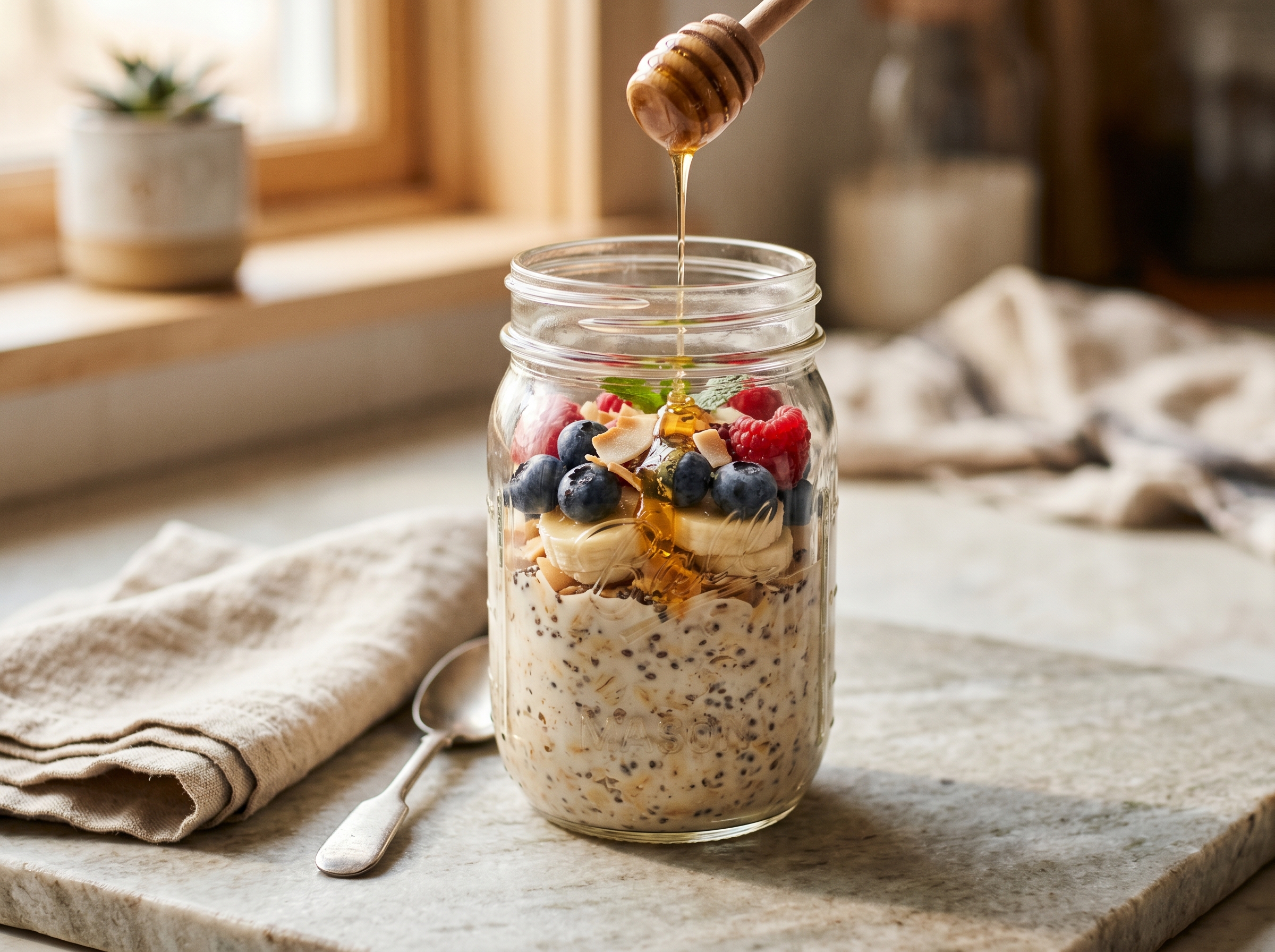
Overnight oats are one of the easiest, most practical breakfasts you can add to your routine — prep takes five minutes, and you wake up to a ready-to-eat, high-protein meal. The base recipe is built around oats, chia seeds, milk, and a full scoop of vanilla protein powder, giving you a solid nutrition foundation before you’ve even had your coffee. From there, you customize with whatever toppings or mix-ins suit your preferences and goals.
Nutrition Per Serving
Calories: 390 | Protein: 35g | Carbs: 37g | Fat: 12g | Fibre: 11g
Makes 1 serving. Nutrition based on 2% cow’s milk and a standard 30g vanilla protein powder scoop. Values will vary with milk choice and protein powder brand.
Ingredients
- 1/3 cup oats
- 1/2 cup milk (choose your preference)
- 2 tbsp chia seeds
- 1/4 cup vanilla protein powder
Optional prep add-ins (mix in the night before):
- 2 tbsp cocoa powder
- 1 tsp cinnamon
- 1 tbsp peanut butter
Optional morning-of toppings:
- Crushed nuts
- Drizzle of honey or maple syrup
- Coconut flakes
- Hemp seeds
- Fruit (banana slices, berries, chopped apple)
Instructions
1. Mix and Refrigerate
Add the oats, milk, chia seeds, protein powder, and any optional prep add-ins to a mason jar or airtight container. Stir well to combine. Seal and place in the fridge overnight, or for at least 4 hours.
2. Store Until Ready
Keep refrigerated in an airtight container for up to four days. This makes overnight oats an ideal option for batch prepping multiple servings at once.
3. Serve and Enjoy
When ready to eat, add your morning-of toppings. Enjoy cold straight from the fridge, or heat for about 1 minute in the microwave for a warm breakfast option.
Dietitian Tips
- Batch prep for the week. Making three or more jars at a time means you have a grab-and-go breakfast ready for several mornings — no thought required.
- Swap milk to suit your needs. Any milk works here — dairy, oat, almond, soy. Each will shift the nutrition slightly, particularly protein and fat. A higher-protein option like dairy or soy milk will boost the protein content further.
- Choose toppings with your goals in mind. Fresh fruit adds fibre and micronutrients, nuts add healthy fats and crunch, and a small drizzle of honey adds a touch of sweetness without overdoing it. Pick what fits your calorie and macro targets for the day.
Want more recipes like this?
Explore the Resources page for nutrition guides, meal planning tips, and more high-protein ideas to fuel your goals.
Leverage Nutrition clients get access to the full Recipe Selector — a personalized tool that filters recipes by your macros, preferences, and goals. Learn more about working with Michael →
by Michael Fouts, RD | May 9, 2026
If you’re one of the 3 million Canadians currently taking a GLP-1 medication like Ozempic, Wegovy, or Mounjaro, you’ve probably noticed something: eating feels different now. Your appetite is quieter, portions feel enormous, and food might not sound as appealing as it used to. While these medications are remarkably effective for weight management, they also create a nutritional challenge — when you’re eating less, every bite needs to count.
Why What You Eat on Ozempic Matters More Than Ever
GLP-1 medications work by mimicking a hormone that slows digestion and reduces appetite. This means most people naturally eat significantly less — often 20–40% fewer calories without trying. That’s the point, of course, but here’s the catch: if you’re not strategic about what to eat on Ozempic, you risk losing muscle along with fat, developing nutrient deficiencies, and feeling chronically fatigued.
The research is clear that rapid weight loss without adequate protein leads to substantial muscle loss. Since muscle is metabolically active tissue that helps maintain your metabolism and functional strength, preserving it should be a top priority. This becomes even more important for Canadians approaching or past middle age, where muscle preservation directly impacts long-term health outcomes.
With generic semaglutide expected to hit Canadian pharmacies in September 2026, we’ll likely see even more people navigating these nutritional challenges. Getting your eating strategy right now sets you up for sustainable success.
Protein-First Eating: The Non-Negotiable Foundation
When figuring out what to eat on Ozempic, protein needs to come first — literally. Start every meal with your protein source before moving on to vegetables, carbohydrates, or anything else. This isn’t just about hitting your daily target; it’s about maximizing absorption when your appetite is limited and your stomach empties more slowly.
Most GLP-1 users should aim for 1.2–1.6 grams of protein per kilogram of body weight daily, with the higher end being appropriate if you’re also doing resistance training (which you should be). For a 75 kg person, that’s roughly 90–120 grams of protein spread across the day. Since portion sizes feel challenging on these medications, prioritizing protein-dense foods becomes essential.
Practical protein sources that work well for GLP-1 users include:
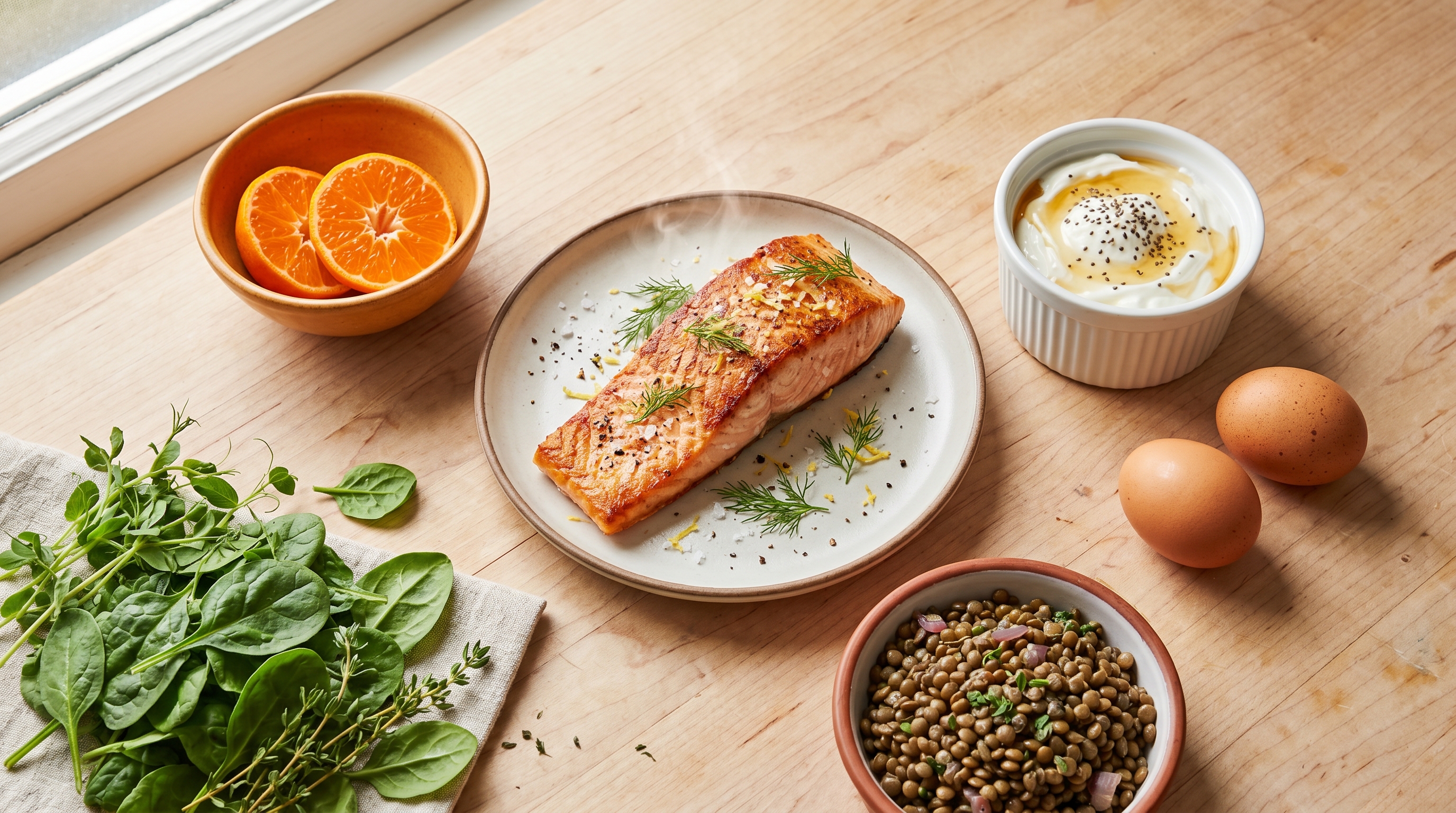
- Greek yogurt (18–20g per cup) — often well-tolerated even when appetite is low
- Eggs (6g each) — easy to prepare, gentle on the stomach
- Cottage cheese (14g per half cup) — protein-dense and versatile
- Chicken breast (30g per 100g) — lean and efficient
- Fish and seafood — lighter options that many find easier to eat
- Protein powder in smoothies — helpful when solid food feels like too much
Fibre, Hydration, and the GLP-1 Side Effect Connection
Two of the most common complaints among GLP-1 users are constipation and nausea. Both are directly connected to what you eat on Ozempic — specifically, your fibre and fluid intake. Since these medications slow gastric emptying, food sits in your digestive system longer. Without adequate fibre and water, things can get uncomfortable quickly.
Aim for 25–30 grams of fibre daily, but increase gradually if you’re not currently hitting that target. Sudden fibre increases combined with slowed digestion is a recipe for bloating and discomfort. Good sources include vegetables, fruits with skin, legumes, and whole grains. Spread your fibre intake throughout the day rather than loading it into one meal.
Hydration deserves equal attention. Many GLP-1 users report drinking less simply because they’re not as hungry or thirsty. Target at least 2–2.5 litres of fluid daily, and more if you’re active. Sipping water throughout the day often works better than trying to drink large amounts at once, which can worsen nausea. Herbal teas and broths count toward your fluid intake and may be more appealing than plain water.
Meal Timing Strategies for GLP-1 Users
When your appetite is suppressed, meal timing becomes less about hunger cues and more about intentional nutrition. Many people on GLP-1 medications find that eating by the clock — rather than waiting for hunger — helps them meet their protein and nutrient needs.
Research on meal timing in the general population suggests that front-loading calories earlier in the day may support better metabolic outcomes. A 2026 analysis of over 7,000 adults found that eating breakfast earlier and extending the overnight fasting window was consistently associated with lower body weight and smaller waist circumference over time. For GLP-1 users, this approach has an added benefit: appetite tends to be slightly better earlier in the day before medication effects peak.
Consider structuring your day with:
- A protein-rich breakfast within 1–2 hours of waking
- A moderate lunch with protein, vegetables, and some complex carbohydrates
- A lighter dinner if appetite is minimal by evening
- A protein-rich snack if needed to meet daily targets
Some people find that smaller, more frequent meals work better than traditional three-meal patterns. Experiment to find what helps you eat enough without triggering nausea.
The Bottom Line
GLP-1 medications like Ozempic are powerful tools, but they work best when paired with strategic nutrition. Knowing what to eat on Ozempic — prioritizing protein at every meal, maintaining adequate fibre and hydration, and timing your meals intentionally — helps you preserve muscle, minimize side effects, and support sustainable results. The goal isn’t just weight loss; it’s losing fat while maintaining the muscle and energy you need for a healthy, active life.
With generic semaglutide arriving in Canada in late 2026, more people will be navigating these decisions. The fundamentals remain the same: protein first, fibre and fluids consistently, and eating intentionally even when appetite is quiet.
If you’re looking for personalized guidance on nutrition while taking GLP-1 medications, learn more about working with a Registered Dietitian at leveragenutrition.ca.
Thanks for reading. Here are some other ways we can help:
Social Media: Instagram I Youtube I Facebook
by Michael Fouts, RD | May 1, 2026
If you’ve ever dismissed creatine as a supplement for bodybuilders and gym bros, you’re not alone. For years, creatine has been marketed almost exclusively to men chasing bigger muscles. But the science tells a completely different story — and the latest 2026 research suggests that creatine for women may actually be more beneficial than it is for men.
Why Women Respond Differently to Creatine
Here’s something most people don’t realise: women naturally have lower baseline creatine stores than men. This isn’t a disadvantage — it’s actually why women tend to respond even more noticeably to creatine supplementation. When you start from a lower baseline, there’s simply more room for improvement.
Creatine is stored primarily in your muscles, where it helps regenerate ATP — your cells’ primary energy currency. During high-intensity activities like lifting weights, sprinting, or even climbing stairs with groceries, your muscles burn through ATP rapidly. More creatine means faster ATP regeneration, which translates to better performance, more strength, and improved recovery between sets.
For women specifically, this can mean finally breaking through plateaus in the gym, feeling stronger during workouts, and recovering faster between training sessions. And contrary to persistent myths, creatine does not cause significant water retention or “bloating” in women when dosed appropriately.
Creatine for Women and Bone Health: The 2026 Breakthrough
Perhaps the most exciting finding from recent research has nothing to do with muscle at all. A comprehensive 2026 review examined creatine’s effects on bone health in post-menopausal women — a population at significantly elevated risk for osteoporosis and fractures.
The results were striking: creatine combined with resistance training reduced bone loss by four times compared to resistance training alone. Let that sink in for a moment. We’re not talking about a modest improvement — we’re talking about a fourfold difference in preserving bone density.
For Canadian women, this matters enormously. Osteoporosis affects approximately 2 million Canadians, with women accounting for 80% of cases. Hip fractures alone cost our healthcare system over $1 billion annually, and the personal cost in terms of independence and quality of life is immeasurable. A simple, safe, inexpensive supplement that significantly enhances the bone-protective effects of exercise deserves serious attention.
It’s worth noting that the research on bone health used higher doses than typical muscle-building protocols. While 3g daily works well for performance benefits, studies showing bone health improvements generally used 8g as the minimum effective dose.
Beyond Muscle: Cognitive and Hormonal Benefits
The benefits of creatine for women extend beyond the physical. Emerging research suggests creatine may support cognitive function, particularly during periods of stress or sleep deprivation. Your brain is highly metabolically active and uses significant amounts of ATP — so it makes sense that creatine availability could influence mental performance.
There’s also preliminary evidence suggesting creatine may help with symptoms related to the menstrual cycle, though this research is still in early stages. Some women report improved energy and reduced fatigue during their luteal phase when supplementing with creatine, though individual responses vary.
What we can say confidently is that creatine is one of the most thoroughly researched supplements available. Decades of studies consistently demonstrate its safety profile, even with long-term use. The myths about kidney damage or liver stress simply aren’t supported by evidence in healthy individuals.
How to Start Taking Creatine: Practical Guidelines
If you’re considering adding creatine to your routine, here’s how to approach it sensibly:
- For muscle and performance: Start with 3g of creatine monohydrate daily. This is the most researched form and also the most affordable. No loading phase is necessary — consistent daily dosing will saturate your muscles within 3–4 weeks.
- For bone health benefits: Research suggests 8g daily as the minimum effective dose. If this is your primary goal, consider splitting into two 4g doses with meals.
- Timing doesn’t matter much: Take it whenever is most convenient and consistent for you. With food, without food, morning or evening — the key is daily consistency.
- Skip the fancy versions: Creatine monohydrate is the gold standard. More expensive forms like creatine HCL or buffered creatine haven’t been shown to be more effective.
Most women notice improvements in workout performance within 2–4 weeks of consistent supplementation. Bone health benefits, naturally, take longer to manifest and are best measured through regular bone density screening.
The Bottom Line
Creatine for women isn’t just acceptable — it may be more beneficial than it is for men, thanks to lower baseline stores and greater relative response to supplementation. The 2026 research on bone health alone makes it worth serious consideration for any woman engaged in resistance training, particularly those approaching or past menopause.
At 3–8g daily of an inexpensive, well-researched supplement, creatine offers one of the best risk-to-benefit ratios in sports nutrition. It’s time to retire the outdated notion that this supplement belongs exclusively in men’s gym bags.
Want personalised guidance on supplements and nutrition strategies that actually work? Learn more at leveragenutrition.ca.
Thanks for reading. Here are some other ways we can help:
Social Media: Instagram I Youtube I Facebook