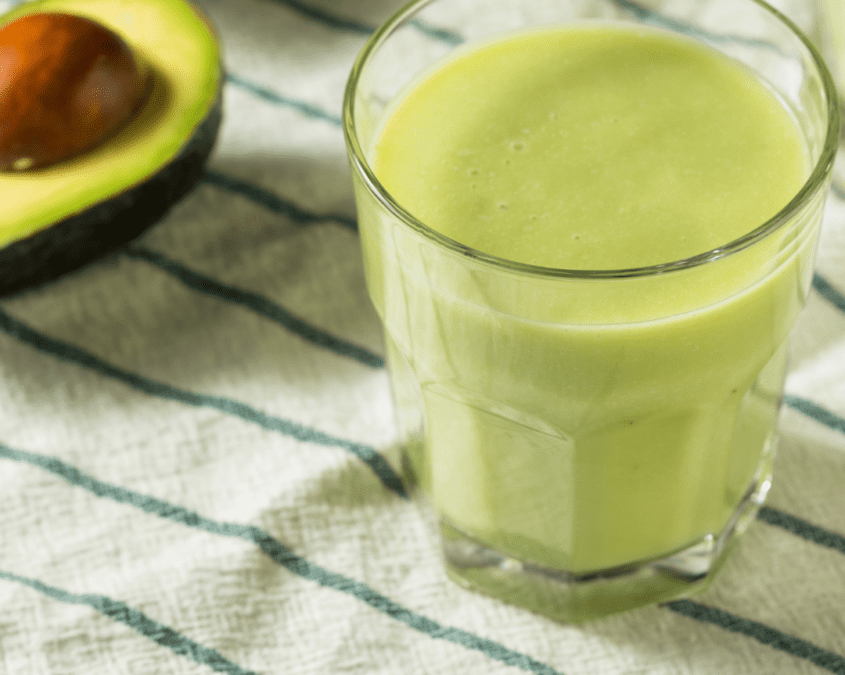
Recipe: Cinnamon Avocado Peanut Butter Banana Protein Smoothie

Recipe: Cinnamon Avocado Peanut Butter Banana Protein Smoothie

Cinnamon Avocado Peanut Butter Banana Protein Smoothie


Skill Level

Easy

Time

4 min

Serves

1


Calories

303

Protein

24g

Fat

12g

Carbs

28g

Fibre

6g

Equipment Needed

Ingredients

  • 1/2 Medium Avocado (or 1/3 cup frozen avocado chunks)
  • 1/2 Medium Banana (can also use frozen, reduce the amount of ice added if you do)
  • 1 tbsp smooth peanut butter
  • 1/2 scoop protein powder (chocolate or vanilla works best – this is the one I use)
  • 1/2 cup skim milk
  • 1 tsp chia seeds
  • 1 tsp cinnamon powder
  • 1/2 cup of ice – or more or less based on your smoothie texture preference, more = thicker

Instructions

Step 1

Add ingredients to blender, blend.

Notes About Recipe

  • The type of protein powder you use will make a pretty big impact on taste. I use this one, so if you don’t know which one to use try that one out.
  • You can alter this recipe to have a lot more calories if you’d like, like some Athletes that struggle to eat enough. See recipe link below for the higher calorie version.

Download Recipe

Click here to download a pdf of the above version of this recipe.

Click here to download a pdf of a higher calorie version (837 calories!)

Affiliate disclosure: this blog contains affiliate links. This means that if you click through a link and make a decision to purchase, we will receive some compensation from the vendor; at no cost to you.

 

Want to try new recipes? Input your email below to recieve a weekly email with 1 recipe and nutrition tip; this is a comfortable way to learn more about nutrition and explore new recipes.

Get Social With Us

Athletes: Optimize and Simplify Your Nutrition With Athlete Plates

Athletes: Optimize and Simplify Your Nutrition With Athlete Plates

What Are Athlete Plates?

They are visuals on how athletes can combine different foods and drink at meals, which will help them match their energy and nutrient needs for different training/exercise intensities and goals. With this approach the athlete doesn’t have to track calories or different macronutrients, rather just focus on proportions. This is an easier and more flexible approach to adhere to long-term.

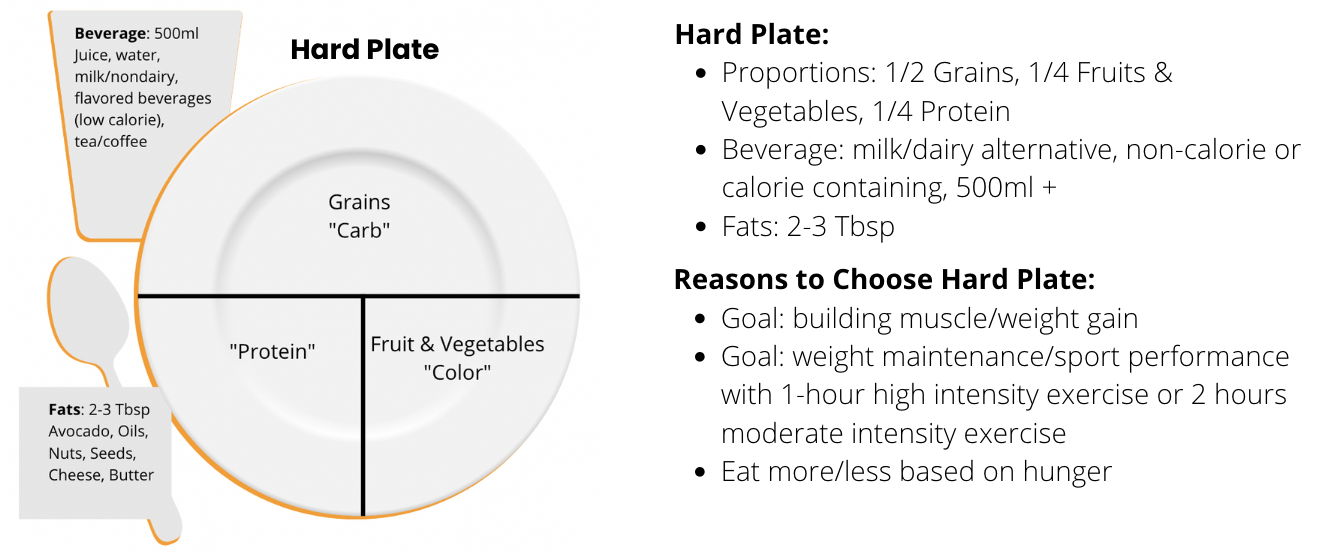
The main component of each plate is a portion of whole grains/grains, protein, and fruits/vegetables. An easy way to remember this is “Carb, Protein, Color.” Each plate has different training goals and intensities associated with them (see images below).

  • What is a Carb? Carb = Carbohydrates. These are foods like bread, pasta, and rice (fruits and vegetables also can be a carb, but for simplicity’s sake we’ll refer to them as “color”). Carbs are the body’s predominate fuel source when performing higher intensity exercise/workouts.
  • What is Protein? Protein are foods like meat, fish, eggs, beans, and nuts. Protein is used by the body to build and repair tissues, like muscles after intense exercise/workouts.

Disclaimer: The Athlete Plates you see in this document are not the original work of Leverage Nutrition, rather they are an adaptation of the Athlete’s Plate® by the University of Colorado.

Understanding The Differences

Below are the main differences between the plates:

  • Different proportions of different food types
  • Beverage options: (+) Juice offered with Moderate and Hard Plates
  • Beverage size: +100ml with each increase with each increasing plate type
    • Of note: +100ml is not enough to account for total increase necessary, rather this is just a suggestion that more is needed and will help add a more practical amount)
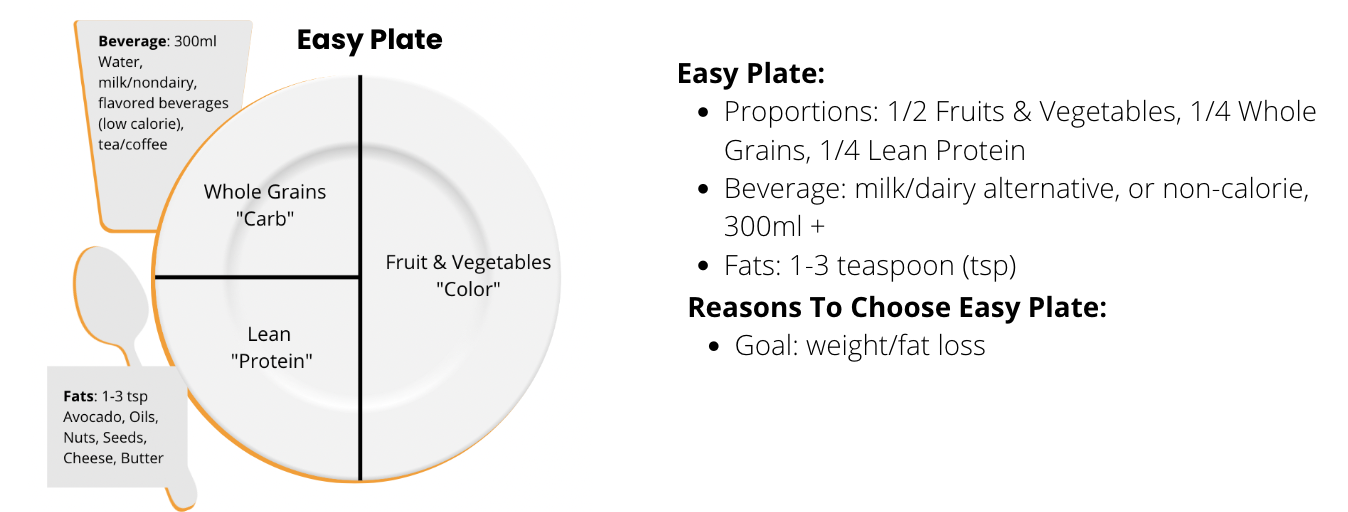
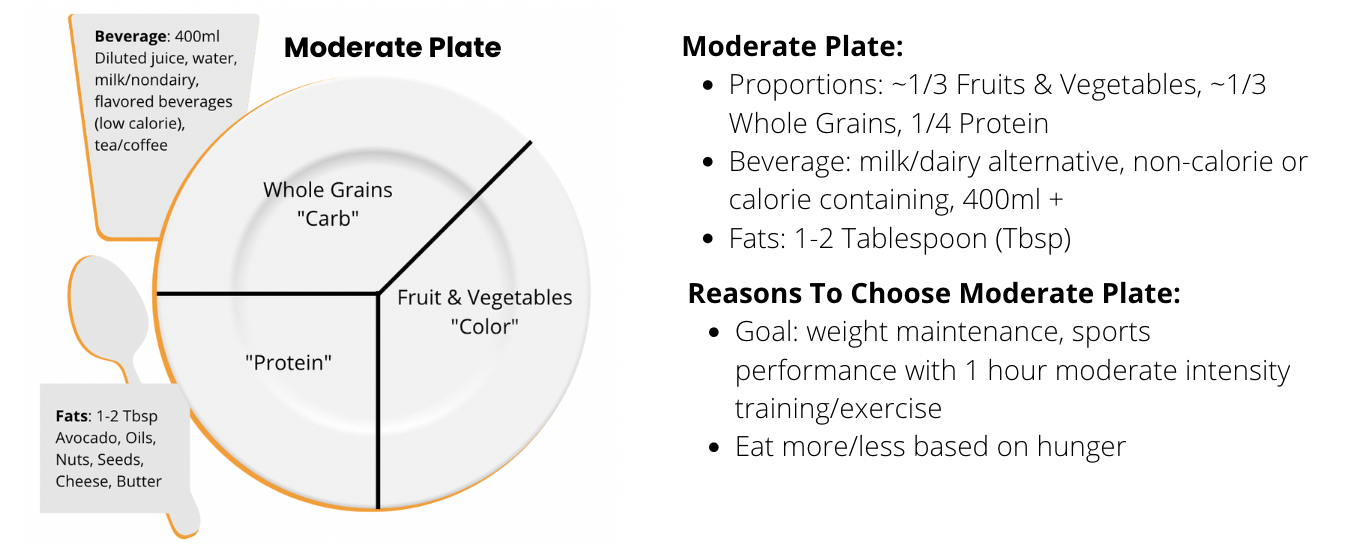
  • Fat serving sizes: 1-3 tsp (Easy), 1-2 Tbsp (Moderate), 2-3 Tbsp (Hard)
  • Lean Protein (Easy), Protein (Moderate and Hard)
  • Whole grain (Easy & Moderate), Grains (Hard)

The above differences, and different proportions, all help the athlete consume more/less energy (calories) from food. For example, larger servings of fat will help the athlete consume more energy, and vice versa.

“Lean Protein”, and “Protein” are different options since lean protein has less energy, which is needed with the Easy Plate.

The Hard plate suggests Grain vs Whole Grain. Whole Grain (think brown bread) contains more fibre than Grain (think white bread), and is something that makes you feel full. It’s possible that having too much fibre can make you feel too full and not eat enough food (energy). Fibre is also found in fruits and vegetables, which is why their proportion decreases with increasing training intensity.

Like fibre, but to a greater extent, protein also makes you feel full. Therefore, it’s kept at 1/4 plate proportion with all plates.

How to Implement

Eat plate type at each meal based on goal and activity level.

Easy Plate

  • Goal: weight/fat loss

Moderate Plate

  • Goal: weight maintenance/sport performance with 1-hour moderate intensity exercise
  • Eat more/less based on hunger

Hard Plate

  • Goal: building muscle/weight gain
  • Goal: weight maintenance/sport performance with 1-hour high intensity exercise or 2 hours moderate intensity exercise
  • Eat more/less based on hunger

Other things to consider:

  • Bigger person bigger plate
  • In addition to 3 meals per day, should have 2-3 snacks
  • For some, might need to personalize (e.g., if trying to gain weight and eating Hard Plate but not working)
  • Important to understand this is just one strategy (that isn’t perfect) to help simplify athlete food intake

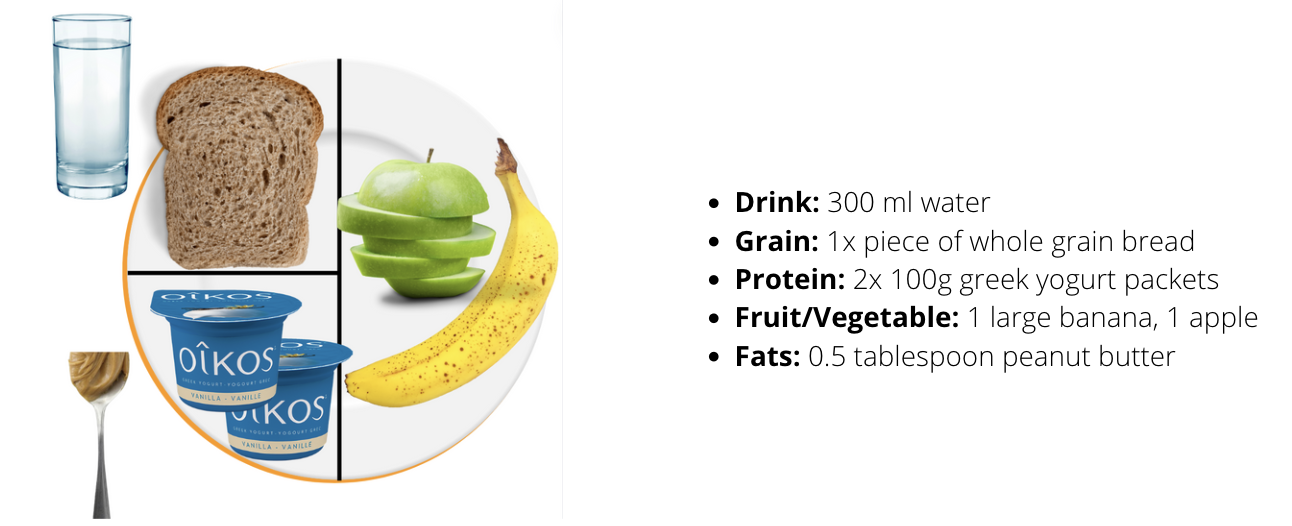
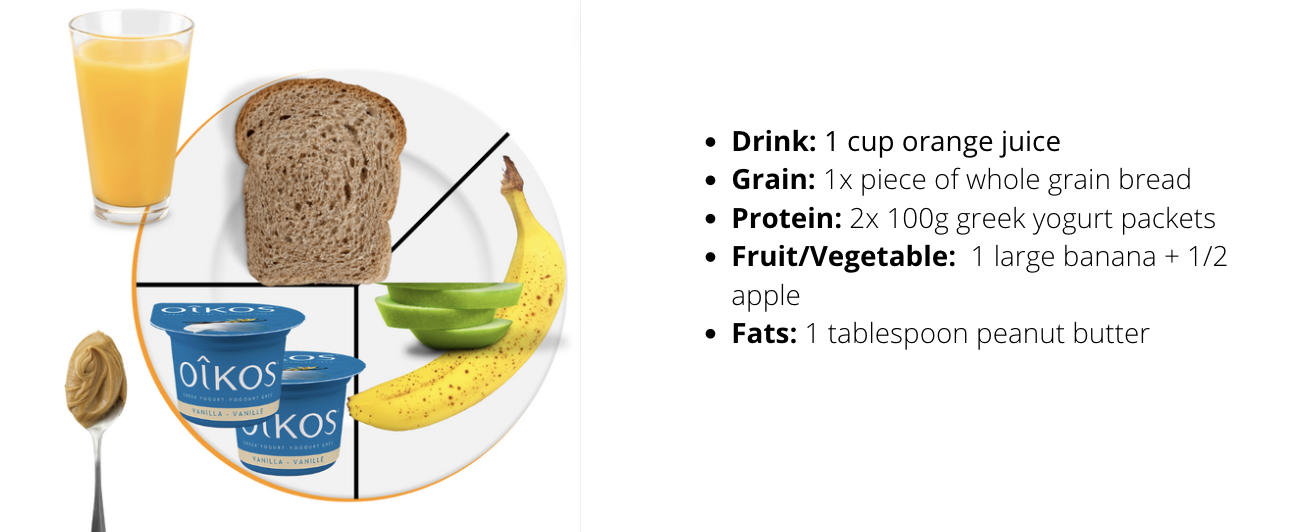
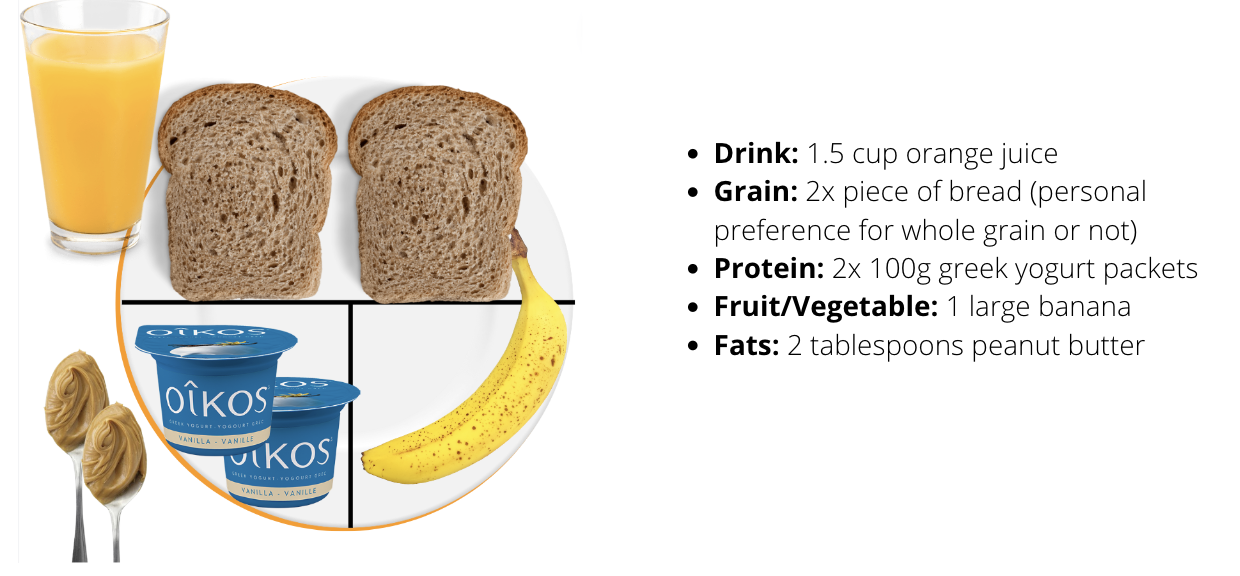
Examples

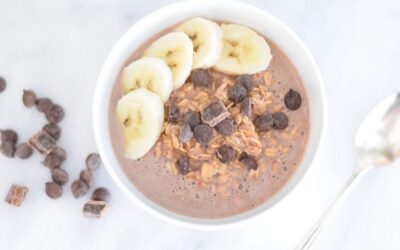
Breakfast Easy Plate

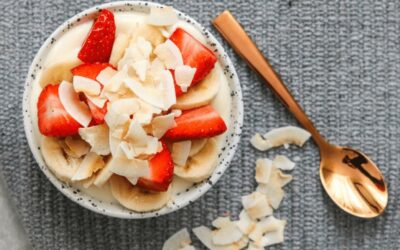
Breakfast Moderate Plate

Breakfast Hard Plate

For more examples click here to download a pdf of our Athlete Plates resource.

Thanks for reading. Here are some other ways we can help:

Free:

Recipe Packs

Athlete Plates Resource

Weekly email: 1 Recipe & Nutrition Tip

Social Media: Instagram / Tik Tok / Facebook


Paid:

Nutrition Courses

Work with a Dietitian

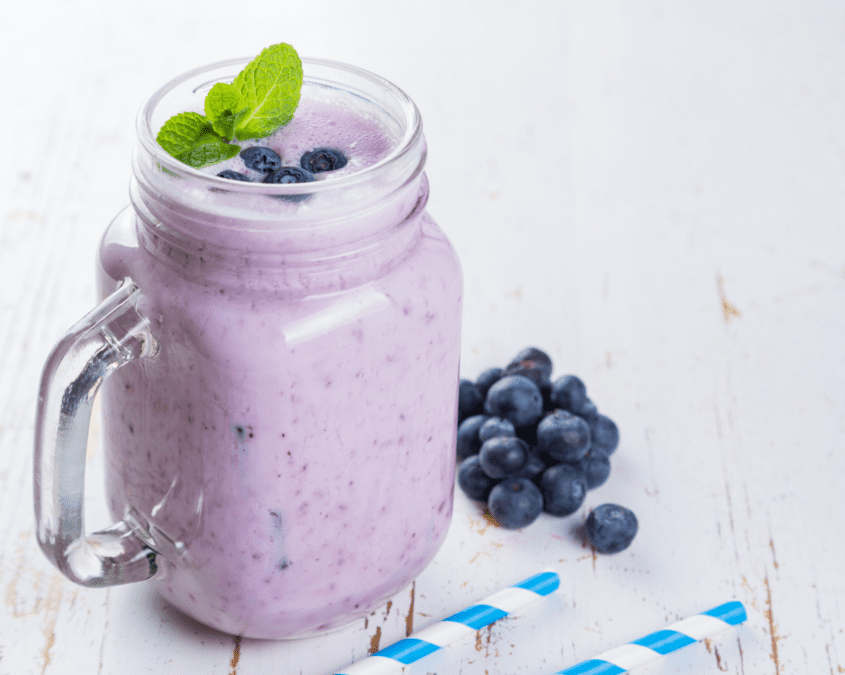
Recipe: Vanilla Blueberry Banana Protein Smoothie

Recipe: Vanilla Blueberry Banana Protein Smoothie

Vanilla Blueberry Banana Protein Smoothie

Skill Level

Easy

Time

5 min

Serves

1

Calories

375

Protein

37g

Fat

4g

Carbs

60g

Equipment Needed

Ingredients

  • 1 medium banana (fresh or frozen)
  • ½ cup blueberries (fresh or frozen)
  • ¼ cup 2% cottage cheese
  • ¼ cup (100g packet) vanilla Greek yogurt
  • ½ scoop vanilla protein powder
  • 1/2 cup 1% cows milk (or almond)
  • 1 cup ice cubes (~8), less if you used a frozen banana or blue berries.


Instructions

Step 1

Mix all into a blender, and pulse and blend for 30-60 seconds.

Notes About Recipe

  • Try out different variations of this smoothie with other fruit options such as, strawberry and banana.
  • If you have a personal preference for almond milk, you can use that instead. If you do, it will have 2 less grams of protein and 3 less grams of carbs.

Download Recipe

Click here to download a pdf version of this recipe.

Affiliate disclosure: this blog contains affiliate links. This means that if you click through a link and make a decision to purchase, we will receive some compensation from the vendor; at no cost to you.


Want to try new recipes? Input your email below to recieve a weekly email with 1 recipe and nutrition tip; this is a comfortable way to learn more about nutrition and explore new recipes.

Get Social With Us

Recipe: PB & J Yogurt Bowl

Recipe: PB & J Yogurt Bowl

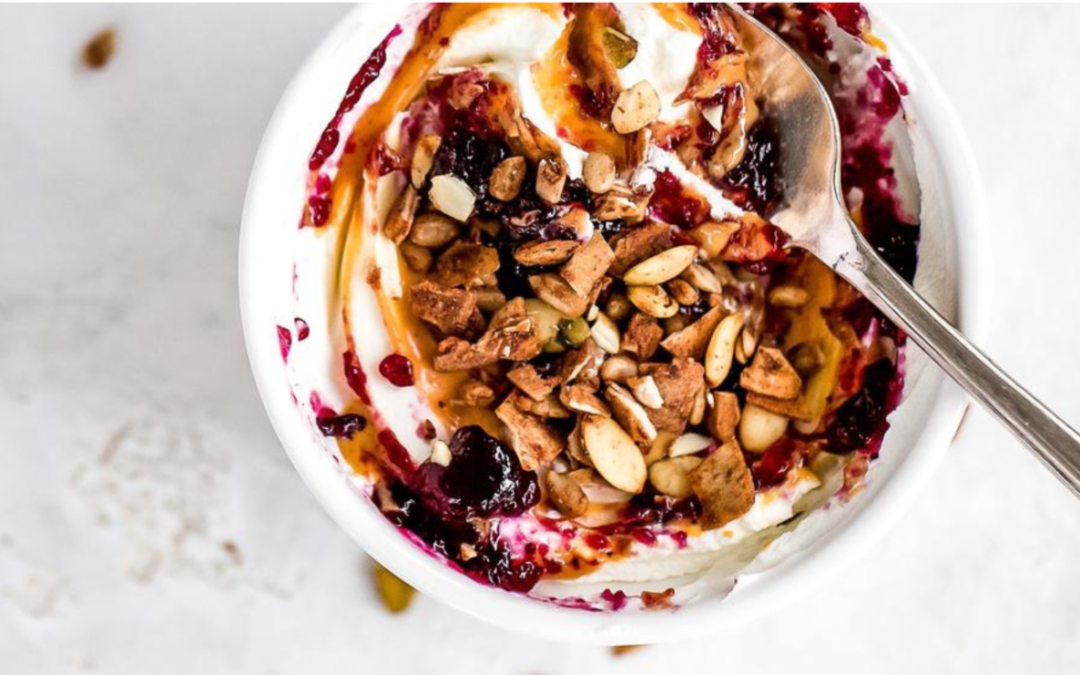
PB & J Yogurt Bowl


Skill Level

Easy

Time

2 min

Servings

1

Calories

305

Protein

14g

Fat

16g

Carbs

28g

Equipment Needed

  • Small bowl

Ingredients

  • 1/2 cup Plain Fat Free Greek Yogurt
  • 2 tbsps All Natural Peanut Butter
  • 1 1/2 tbsps Strawberry Jam
  • 1/4 cup Granola


Instructions

Step 1

Serve the yogurt in a bowl with peanut butter, jam, and granola and mix. Enjoy!

Notes About Recipe

  • Nut-Free: Use sunflower seed butter instead of peanut butter
  • More protein: increase serving size of greek yogurt
  • More calories: don’t use fat free greek yogurt, increase serving size of peanut butter and jam

Download Recipe

Click here to download a pdf version of this recipe.


Want to try new recipes? Input your email below to recieve a weekly email with 1 recipe and nutrition tip; this is a comfortable way to learn more about nutrition and explore new recipes.

Get Social With Us

Decoding Dietary Fats: Saturated, Trans, and Unsaturated Fats – Whats Healthy, and What’s Not?

Decoding Dietary Fats: Saturated, Trans, and Unsaturated Fats – Whats Healthy, and What’s Not?

Fats are an essential component of a balanced diet, but not all fats are created equal. In this blog post, we’ll unravel the mysteries surrounding fats, helping you make informed choices.

Let’s start by talking about the different types of fats. Dietary fats can be categorized into the following types of fats:

  • Saturated Fats
  • Trans Fats
  • Unsaturated Fats (mono and poly-unsaturated)

The “healthy” fats are unsaturated fats, found in foods like avocado and olive oil. The “unhealthy” fats are saturated fats and trans fats, found in foods like baked goods and red meat. Parenthesis is being used around both, because both types of fats are not inherently bad for you. Rather, it’s the quantity that will determine if it’s healthy/unhealthy.

Let’s talk about each of these fats in more detail.

Saturated Fats

Saturated fat has been touted to “clog arteries,” and the American Heart Association suggests maintaining a dietary pattern where only 5-6% of daily caloric intake is sourced from saturated fat. This is due to evidence of excessive consumption of saturated fats leading to increased cholesterol levels in the blood, which can increase risk of developing heart disease.

Most common sources:

  • Cream
  • Butter
  • Lard
  • Ghee
  • Red meats (e.g., beef, pork, lamb)
  • Poultry (especially with skin)
  • Coconut oil
  • Palm oil
  • Palm kernel oil
  • Dairy products like cheese and milk

What the research suggests:

  • Effect of dietary cholesterol on affecting blood lipid profile is low if saturated fat intake low
  • The saturated fat from dairy doesn’t have a negative effect. It actually can have a positive effect (1, 2, 3)
  • Replacing saturated fat with unsaturated fat, or complex carbohydrate, has a good effect on lowering blood cholesterol levels
  • Animal fat saturated fat is the worst culprits

Take-home message:
Be mindful about your intake of saturated fat, and try to reduce high intakes of foods high in saturated fats.

Trans Fats

Trans fats, categorized into naturally occurring and artificial types, present a dual narrative in the world of nutrition.

    Naturally occurring trans fats, found in small amounts in animal-based products like meat and dairy, derive from the digestive process of grass-grazing animals such as cows and sheep. One example is conjugated linoleic acid (CLA), found in meat and dairy.

    On the other hand, artificial trans fats, crafted through the industrial process of hydrogenation, involves adding hydrogen to liquid vegetable oils to make them solid. This process is used in the food industry to improve the texture, shelf life, and flavour stability of processed foods. These trans fats are prevalent in commercially baked and fried products like pastries, cakes, crackers, doughnuts, and french fries. The easy utility and cost-effectiveness of trans fats, coupled with their prolonged shelf life, make them very common in foods; especially in deep-fried foods at restaurants and fast-food establishments.

    Most common sources:

    • Commercial baked goods, such as cakes, cookies and pies
    • Shortening
    • Microwave popcorn
    • Frozen pizza
    • Refrigerated dough, such as biscuits and rolls
    • Fried foods, including french fries, doughnuts and fried chicken
    • Non dairy coffee creamer
    • Stick margarine

    What the research says:

    • Naturally occurring trans fats in minimal quantities may offer health benefits
    • Artificial trans fats have been shown to have adverse effects, like increasing bad cholesterol (LDL), decreased good cholesterol (HDL), and an increased risk of heart disease, stroke, and type 2 diabetes.
    • Recommend limiting trans fat intake to 5-6% of daily caloric intake to safeguard cardiovascular well-being

    Take-home message:
    Similar to saturated fats, be mindful about your intake and try to reduce high intakes of foods high in saturated fats.

    Unsaturated Fats: Mono and Poly-Unsaturated Fats

    Otherwise known as “healthy” fats, the chemical structure of these fats are slightly different from saturated and trans fats: they have at least one “unsaturation” (where a chemical double bond exists instead of a single bond). This different structure plays a big role in affecting cardiovascular health.

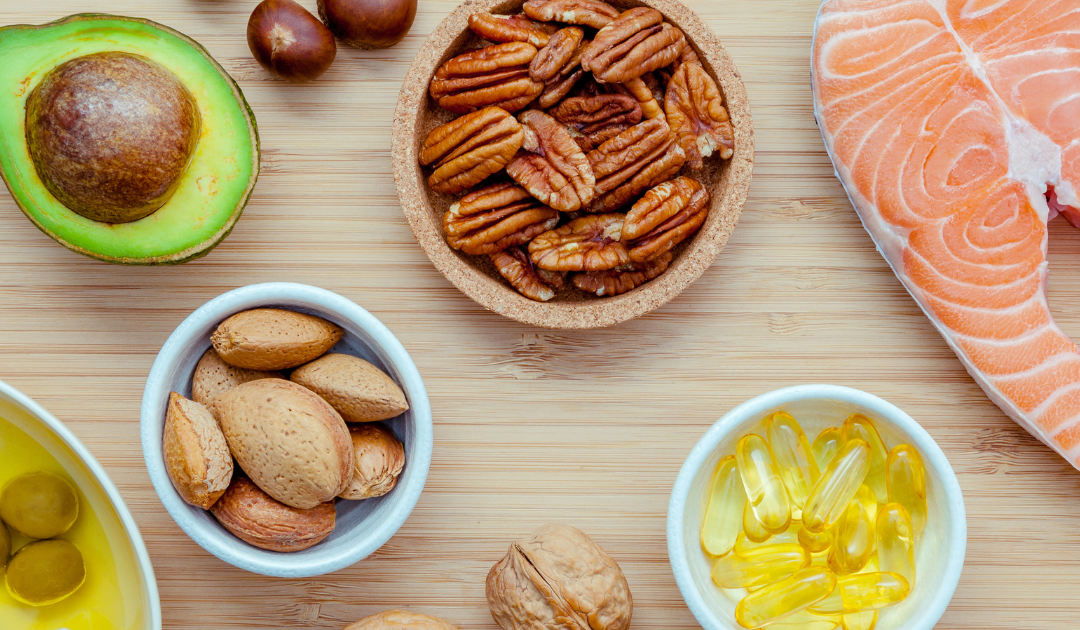
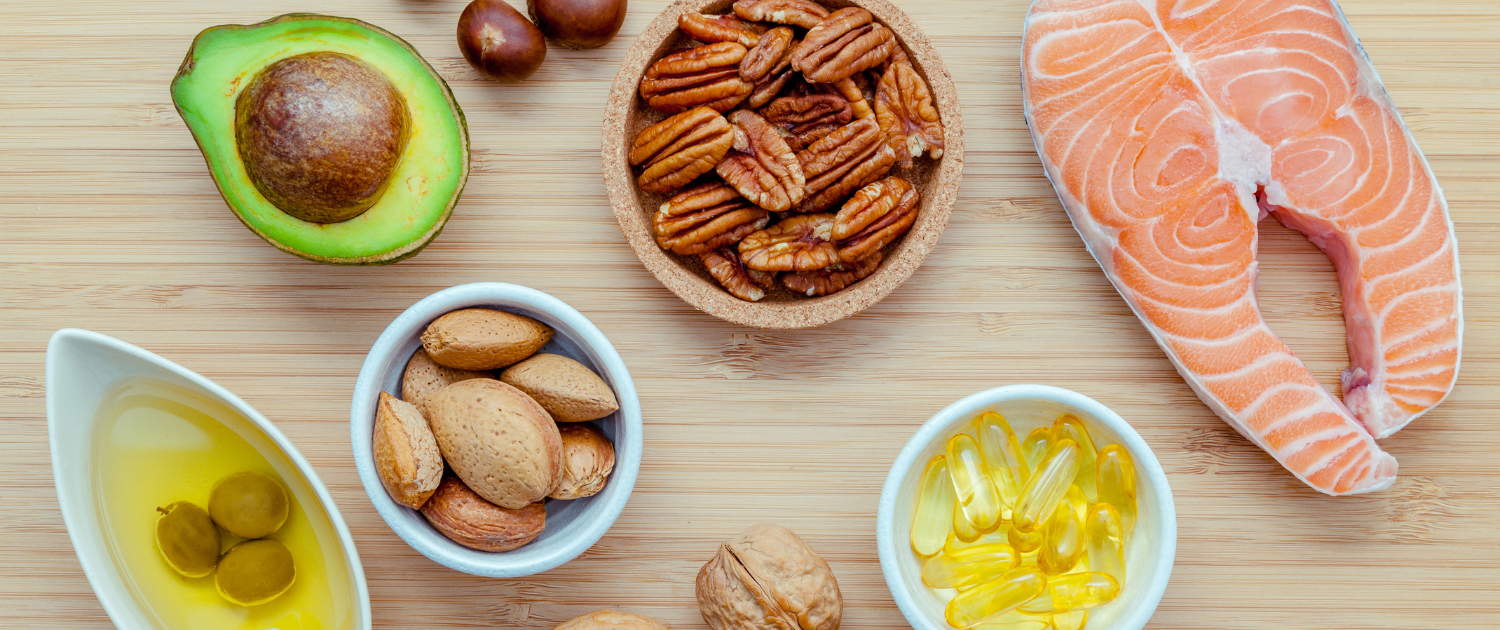
    More specifically, fats with one unsaturation are called mono-unsaturated fats (MUFA), and those with 2 or more are called poly-unsaturated fats (PUFA). One specific type of poly-unsaturated fat is Omega 3’s. Omega-3 fats are essential fats that must be consumed in your diet, as your body cannot produce them. Omega-3s play a role as an anti-inflammatory mediator, and have been shown to be involved with brain and heart health.

    Most common sources:

    • Oils: olive, canola oil, peanut oil, sesame, soybean, safflower
    • Nuts: almonds, pecans, walnuts
    • Seeds: sunflower, sesame, pumpkin, flax
    • Fatty fish
    • Avocados
    • Olives
    • Soy-based products like soy milk and tofu
    • Specific rich sources of omega-3: fatty fish, such as salmon, tuna, arctic char, herring, and anchovies

    What the research says:

    • Reduces bad cholesterol (LDL), triglycerides (PUFA more than MUFA), and elevates good cholesterol (HDL)
    • Helps prevent abnormal heart rhythms, can reduce inflammation and blood pressure
    • Helps prevent atherosclerosis (hardening and narrowing of arteries)
    • Lower risk of heart disease and stroke (largely due to above)
    • Can contribute to satiety (feeling of fullness), which enhances post-meal satisfaction, curbing hunger, and fostering weight loss
    • Supplementation with omega-3s may not have the same health benefits as eating the actual food source itself
    • Omega-3 supplementation may have benefits for heart and brain health, but not all studies have found benefits – especially with healthy research subjects. It is important to choose high-quality supplements and consult with a healthcare provider before taking omega-3 supplements

    Take-home message:
    There is a lot of research to support the positive health effects of unsaturated fats. They should be the predominant type of fat in your diet, and your best bet is to get these healthy fats from your diet; supplementation may/may not help.


    Main Takeaway
    Not all fats are created equal, and quantity matters. It’s ok to have saturated and artificial trans fats in your diet, just make sure you don’t have too much. Have healthier unsaturated fats, and replace saturated fats with unsaturated sources when possible.

    Something that can help you identify if something is saturated or unsaturated fats:

    • Saturated fats are usually solid at room temperature (e.g., lard, shortening, bacon fat, coconut oil)
    • Unsaturated fats are usually liquid at room temperature (e.g., olive oil, avocado oil)

    Thanks for reading. Here are some other ways we can help:

    Free:

    Nutrition Resources

    Other blog posts on this website

    Social Media: Instagram / Tik Tok / Facebook

    Weekly email: 1 Recipe & Nutrition Tip


    Paid:

    Work with a Dietitian

    Nutrition Courses

    References:

    1. Drouin-Chartier J-P et al. ‘Systematic review of the association between dairy product consumption and risk of cardiovascular-related clinical outcomes.’ Advances in Nutrition 7 (2016) 1026–1040.
    2. Bordoni A et al. ‘Dairy products and inflammation: A review of the clinical evidence.’ Critical Reviews in Food Science and Nutrition 57 (2017) 2497–2525.
    3. Larsson SC, Crippa A, Orsini N, Wolk A & Michaëlsson K. ‘Milk consumption and mortality from all causes, cardiovascular disease, and cancer: a systematic review and meta-analysis.’ Nutrients 7 (2015) 7749–7763.
    4. Gareth, Lennon, D., Kieron, Flanagan, A., Prager, S., Lafontaine-Chicha, G., Camus, A., Scott, Jordan, & Patel, A. (2020, June 3). Cholesterol, Lipoproteins & Lipids: Understanding CVD Risk. Sigma Nutrition. https://sigmanutrition.com/lipids/
    5. Kim, A. (2021, March 9). Is Red Meat Good or bad for health?. Sigma Nutrition. https://sigmanutrition.com/red-meat/
    6. Pollock, L., Lennon, D., hWK, D., & Collazo, O. (2022, November 12). How diet influences heart disease risk. Sigma Nutrition. https://sigmanutrition.com/diet-cvd/
    7. Robinson, L. (2023, February 24). Choosing healthy fats. HelpGuide.org. https://www.helpguide.org/articles/healthy-eating/choosing-healthy-fats.htm
    8. Saturated fat. www.heart.org. (2023a, May 10). https://www.heart.org/en/healthy-living/healthy-eating/eat-smart/fats/saturated-fats
    9. Trans fats. www.heart.org. (2023b, May 10). https://www.heart.org/en/healthy-living/healthy-eating/eat-smart/fats/trans-fat
    10. Viglianti, R., Lennon, D., Flanagan, A., Thakur, B., Bhu, Archer, D., & Evi. (2020, July 17). The impact of Diet on blood lipids. Sigma Nutrition. https://sigmanutrition.com/diet-on-lipids/