The Pitfalls of Labeling Food as ‘Good’ or ‘Bad

The Pitfalls of Labeling Food as ‘Good’ or ‘Bad

Labeling food in a dichotomous way (good/bad, healthy/unhealthy, etc.) misunderstands how nutrition influences one’s health or specific goals.

Nutrition influences your health, positively or negatively, over the long-term – your consistent dietary pattern, not isolated events (e.g. eating one chocolate bar, eating a fast food meal, etc.).

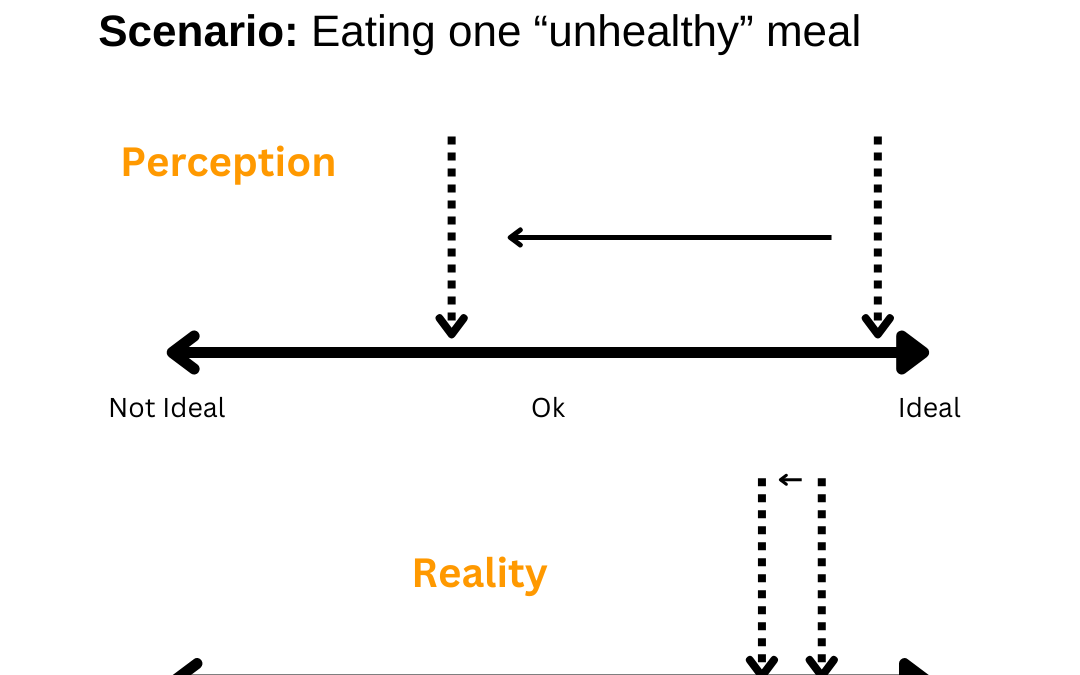
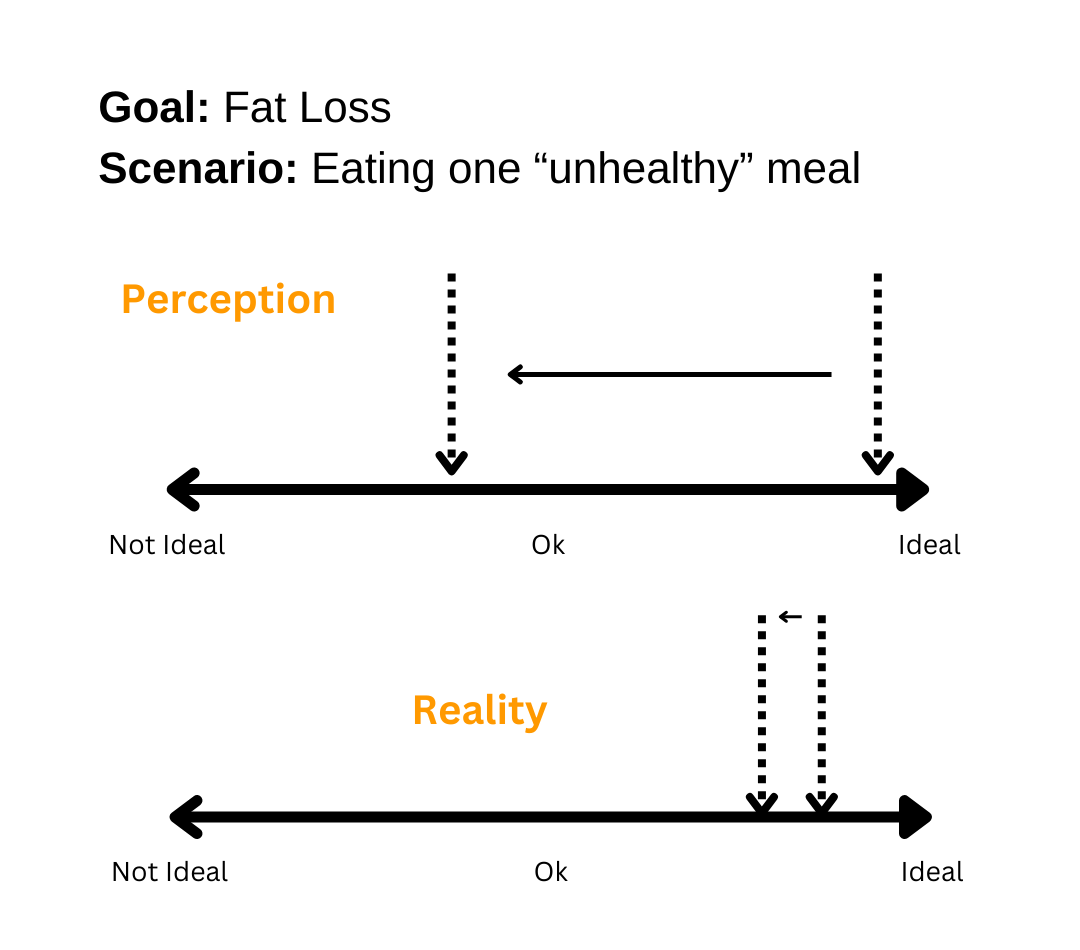
A better approach: view positive or negative changes on a sliding spectrum, between Ideal and not Ideal; and understand that extremes on either end are not reality.

See the following infographics that highlights this better: “quotation marks” are used in the following examples to describe subjective terms.
Takehome Message

Start thinking of your nutrition as a representation of your consistent efforts, not isolated events. Thinking this way will help you understand that food isn’t inherently good/bad, healthy/unhealthy.

As the saying goes: “It’s the dose that makes the poison.”

In the case of positively impacting your health, “It’s the consistent dose that improves your health.”

Positive Nutrition Habits For Health

Here are some positive nutrition habits that if consistently done will improve your health immensely:

  1. Adequate caloric intake for weight management (the following habits will help with this).
  2. Adequate fibre intake (25g/day for females, 38g/day for males). This includes regular consumption of fruits & vegetables, whole grains, beans, legumes, nuts, seeds.
  3. Adequate protein intake (at minimum 0.36g/lb, higher for different goals – e.g. 0.7g/lb for building muscle and strength training).
  4. Mindful eating. Practice mindful eating by paying attention to your food choices, chewing slowly, and savoring each bite. This can help prevent mindless eating and promote better digestion.
  5. Limit Added Sugars and Sodium. Be mindful of hidden sugars and sodium. Opt for naturally sweetened options like fruit and limit your intake of salty snacks and high-sodium foods when possible.
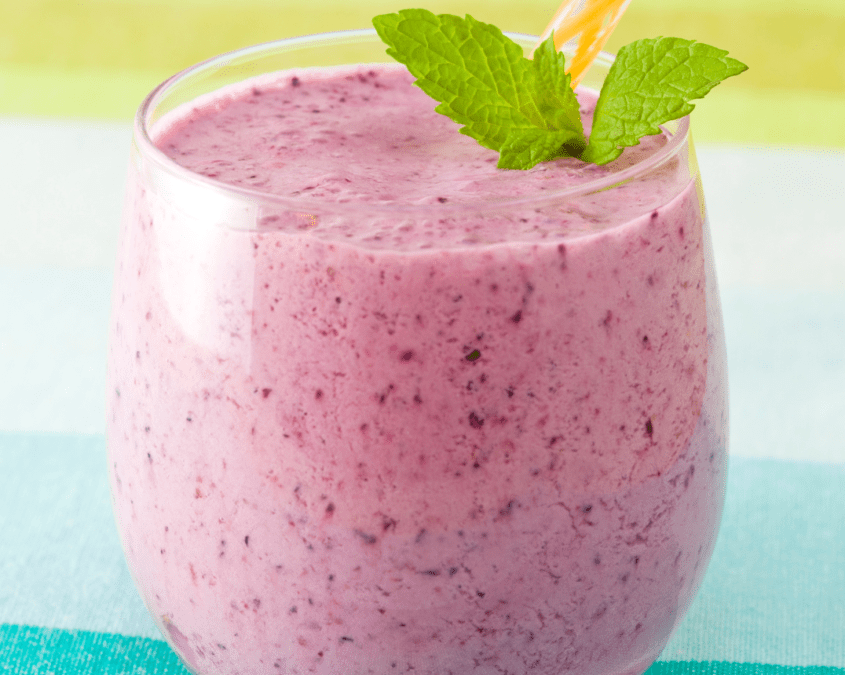
Recipe: Berry Banana Protein Smoothie

Recipe: Berry Banana Protein Smoothie

Berry Banana Protein Smoothie


Skill Level

Easy

Time

4 mins

Serves

1


Calories

348

Protein

23g

Fat

9g

Carbs

47g

Fibre

11g

Equipment Needed

Ingredients

  • 1/3 cup Cottage Cheese
  • 1/4 cup Milk 1%
  • 1 cup Frozen Berries (or fresh)
  • 1/2 Banana (fresh or frozen)
  • 1/2 cup Plain Greek Yogurt
  • 1 tbsp Chia Seeds
  • 1/2 scoop Protein Powder

Instructions

Step 1

Add all the ingredients to a blender, and blend.

Notes About Recipe

  • If you don’t like cottage cheese you can swap out for greek yogurt (but keep in mind that the cottage cheese will be blended, so you won’t taste it)
  • To keep this recipe lower calorie, opt for skim milk and 0% M.F. greek yogurt
  • To make this recipe higher in calories, use any of the following ingredient alterations: 2% milk, 2% cottage cheese, flavored non 0% M.F. greek yogurt, use a full banana, add in 2+ tbsp peanut butter.
  • The type of protein powder you use will make a pretty big impact on taste. I use this one, so if you don’t know which one to use try that one out.

Download Recipe

Click here to download a pdf version of this recipe.

Affiliate disclosure: this blog contains affiliate links. This means that if you click through a link and make a decision to purchase, we will receive some compensation from the vendor; at no cost to you.


Want to try new recipes? Input your email below to recieve a weekly email with 1 recipe and nutrition tip; this is a comfortable way to learn more about nutrition and explore new recipes.

Get Social With Us

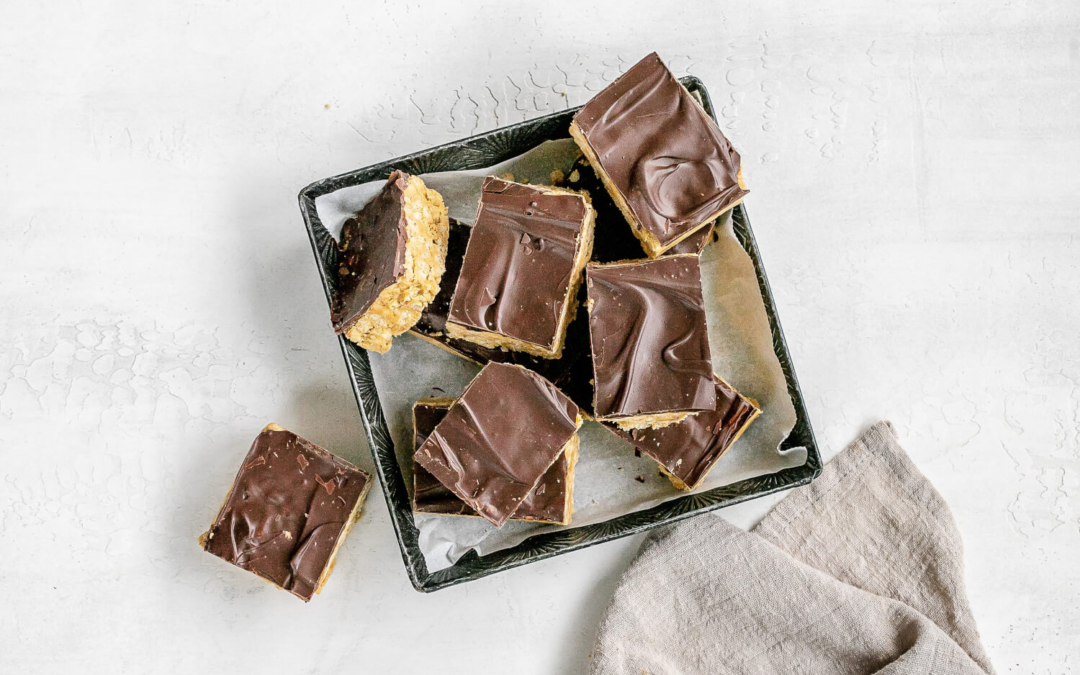
Recipe: Chocolate Protein Crunch Bars

Recipe: Chocolate Protein Crunch Bars

Chocolate Protein Crunch Bars


Skill Level

Moderate

Time

1 hour

Serves

12


Calories

428

Protein

15g

Fat

21g

Carbs

42g

Fibre

1g

Equipment Needed

  • 8 x 8-inch (20 x 20 cm) square pan
  • Parchment paper
  • Large bowl
  • Spatula
  • Double boiler ( 1 large pot + 1 medium size shallow pan that can sit on top)
 

Ingredients

  • 1 cup All Natural Peanut Butter (runny)
  • 1 cup Maple Syrup
  • 3 cups Rice Puffs Cereal
  • 1 1/4 cups Vanilla Protein Powder (~3 scoops normal protein powder scoops)
  • 1 1/2 cups Dark Chocolate Chips

Instructions

Step 1

Line a pan with parchment paper and set aside.

Step 2

In a large bowl, add the peanut butter and maple syrup and mix well to combine. Add the cereal and protein powder and mix well with a spatula until thoroughly combined.

Step 3

Transfer the cereal mixture into the prepared pan, pressing down to create an even layer.

Step 4

Add water to a double boiler or fill a small pot halfway with water and place a heat-safe bowl on top. Bring the water to a boil and add the chocolate chips to the bowl. Melt the chocolate, stirring often. Alternatively, you can melt the chocolate chips in the microwave on 30-second intervals.

Step 5

Pour the melted chocolate over the cereal, spreading it out to create an even layer. Transfer to the fridge until the chocolate has completely set, about 45 minutes, or overnight.

Step 6

Remove the cereal bars and slice into rectangular pieces. Enjoy!

Notes About Recipe

  • Leftovers: refrigerate in an airtight container for up to five days.
  • This recipe was developed and tested using a plant-based protein powder. Please note that if using a different type of protein powder, results may vary.
  • Disclaimer: This recipe adds some protein to an otherwise low protein recipe. That being said, not all recipes need to be modified to have more “health” (vitamins, minerals, fibre, protein, etc.). Especially if they are a treat, or a tasty snack – which are more about enjoyment than nutrition. This is because a treat or snack implies a smaller portion of food, in particular a treat is something you shouldn’t be having daily. Therefore, it’s effect on what your overall diet looks like should be minimal.

Download Recipe

Click here to download a pdf version of this recipe.

Affiliate disclosure: this blog contains affiliate links. This means that if you click through a link and make a decision to purchase, we will receive some compensation from the vendor; at no cost to you.


Want to try new recipes? Input your email below to recieve a weekly email with 1 recipe and nutrition tip; this is a comfortable way to learn more about nutrition and explore new recipes.

Get Social With Us

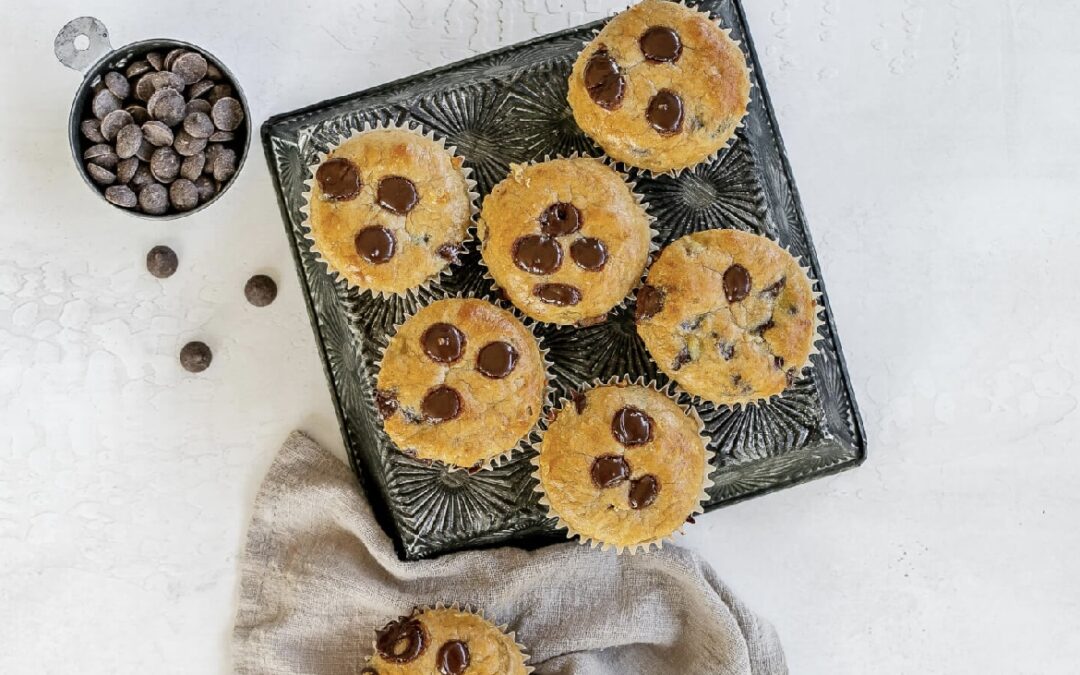
Recipe: Chocolate Chip Protein Muffins

Recipe: Chocolate Chip Protein Muffins

Chocolate Chip Protein Muffins


Skill Level

Moderate

Time

30 min

Serves

8


Calories

343

Protein

13g

Fat

16g

Carbs

36g

Fibre

2g

Equipment Needed

  • Large mixing bowl
  • Whisk
  • Spatula
  • Muffin liners
  • Muffin tray

Ingredients

  • 3/4 cup Vanilla Protein Powder
  • 1/2 cup All-Purpose Flour
  • 1 tsp Baking Powder
  • 1/4 tsp Sea Salt
  • 1/2 cup All Natural Peanut Butter
  • 3 Banana (mashed)
  • 2 tbsps Maple Syrup
  • 3/4 cup Dark Chocolate Chips

Instructions

Step 1

Preheat the oven to 350°F (175°C) and line a muffin tray with liners or use a silicone muffin tray.

Step 2

In a large bowl, whisk together the protein powder, flour, baking powder, and salt.

Step 3

Add the peanut butter, banana, and maple syrup and stir with a spatula until combined. Fold in the chocolate chips.

Step 4

Divide the batter evenly between muffin cups. Bake for 13 to 15 minutes or until firm to the touch and a toothpick inserted comes out clean. Let the muffins cool in the pan for 10 to 15 minutes before removing and transferring to a cooling rack to cool completely. Enjoy!

Notes About Recipe

  • Store in an airtight container at room temperature for the first day and then transfer to the fridge in a sealed container for up to one week.
  • One serving is one muffin.
  • This recipe was developed and tested using a blended whey protein powder. Avoid using whey protein isolate as this will soak up moisture and yield very dense muffins. Brown rice plant-based protein powder will also work. If using a different type of protein powder, results may vary.
  • If you can’t have peanut butter, you can use another nut or seed butter instead.
  • If you can’t have bananas, then applesauce can be substituted.
  • Add chopped walnuts for additional toppings
  • Disclaimer: This recipe adds some protein to an otherwise low protein recipe. That being said, not all recipes need to be modified to have more “health” (vitamins, minerals, fibre, protein, etc.). Especially if they are a treat, or a tasty snack – which are more about enjoyment than nutrition. This is because a treat or snack implies a smaller portion of food, in particular a treat is something you shouldn’t be having daily. Therefore, it’s effect on what your overall diet looks like should be minimal.

Download Recipe

Click here to download a pdf version of this recipe.

Affiliate disclosure: this blog contains affiliate links. This means that if you click through a link and make a decision to purchase, we will receive some compensation from the vendor; at no cost to you.


Want to try new recipes? Input your email below to recieve a weekly email with 1 recipe and nutrition tip; this is a comfortable way to learn more about nutrition and explore new recipes.

Get Social With Us

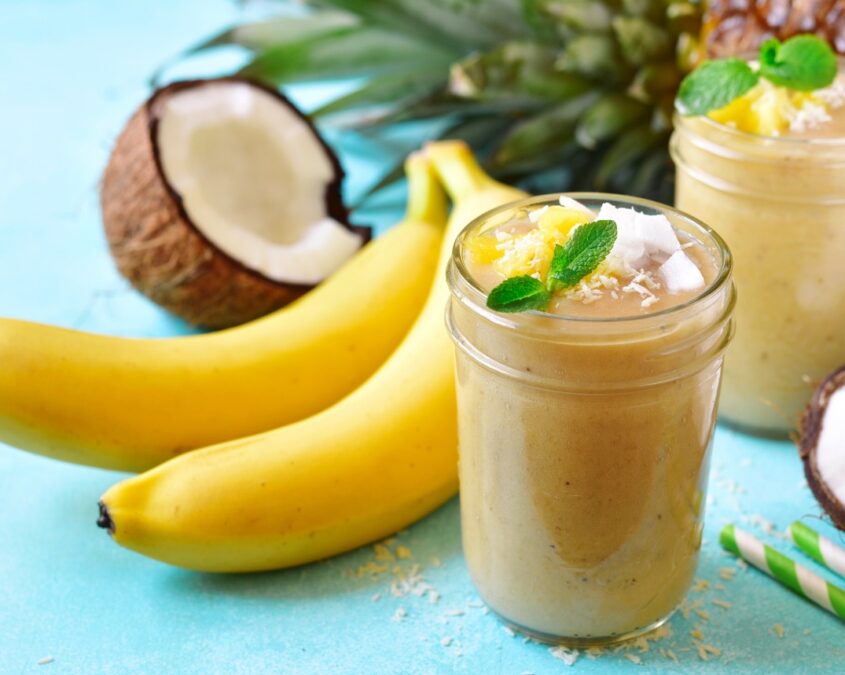
Recipe: Pineapple Coconut Banana Protein Smoothie

Recipe: Pineapple Coconut Banana Protein Smoothie

Pineapple Coconut Banana Protein Smoothie


Skill Level

Easy

Time

4 min

Serves

1


Calories

439

Protein

37g

Fat

14g

Carbs

40g

Fibre

8g

Equipment Needed

Ingredients

  •  1 tbsp chia seeds
  • 1/2 cup frozen pineapples chunks (or fresh + 1/2 cup ice cubes)
  • 1/2 cup (175g) 0% M.F. greek yogurt (preferably coconut flavor, but vanilla or plain works too)
  • 1 scoop vanilla protein powder (this is the one I use)
  • 3/4 cup ice cubes
  • 1/2 cup lite coconut milk
  • 1/2 medium banana (or frozen and reduce 3/4 cup ice cubes to 1/2 cup)

Instructions

Step 1

Add ingredients to blender, blend.

Notes About Recipe

  • The type of protein powder you use will make a pretty big impact on taste. I use this one, so if you don’t know which one to use try that one out.
  • The big change between a lower calorie version of this recipe vs a high calorie version is the use of different fat. The % in coconut milk, % fat of greek yogurt, and larger serving sizes of the ingredients
  • You can alter this recipe to have a lot more calories if you’d like, like some Athletes that struggle to eat enough. See recipe link below for the higher calorie version.

Download Recipe

Click here to download a pdf of the above version of this recipe.

Click here to download a pdf of a higher calorie version (827 calories!)

Affiliate disclosure: this blog contains affiliate links. This means that if you click through a link and make a decision to purchase, we will receive some compensation from the vendor; at no cost to you.


Want to try new recipes? Input your email below to recieve a weekly email with 1 recipe and nutrition tip; this is a comfortable way to learn more about nutrition and explore new recipes.

Get Social With Us