The Simple Way to Calculate Your Calorie Target for Fat Loss

The Simple Way to Calculate Your Calorie Target for Fat Loss
Most people start a fat loss journey with one big question: “How many calories should I eat to lose weight?”
It’s a fair question — and one that’s often overcomplicated by apps, influencers, and online calculators giving wildly different answers.

The truth is, finding your calorie target doesn’t have to feel like solving a math problem. Once you understand a few simple principles, you can estimate your needs with surprising accuracy and adjust based on your real-world results.

Let’s walk through how to calculate your calorie target for fat loss — in a way that’s simple, practical, and effective.


Step 1: Find Your Maintenance Calories

Before you can set a calorie deficit, you first need to know roughly how many calories your body uses to maintain your current weight.
This is often called your maintenance level or Total Daily Energy Expenditure (TDEE) — the number of calories you burn each day through all activities, including resting metabolism, daily movement, exercise, and even digestion.

There are detailed formulas like the Mifflin-St Jeor or Harris-Benedict equations, but most people don’t need that level of precision to get started. A simpler way is to multiply your body weight in pounds by one of the following factors:

Activity Level Description Multiplier
Sedentary Little to no exercise 13–14
Lightly active 1–3 workouts per week 14–15
Moderately active 3–5 workouts per week 15–16
Very active 5+ intense workouts or highly physical job 16–18

Example:
Let’s say someone weighs 180 pounds and works out three times a week.
180 × 15 = 2,700 calories (estimated maintenance).


Step 2: Create a Calorie Deficit

To lose body fat, we need to consistently eat fewer calories than our body burns. This creates an energy deficit that forces the body to use stored fat for energy.

A good starting point is a 15–25% calorie deficit from your maintenance level.

Using our earlier example:

  • 2,700 calories (maintenance)

  • 20% deficit = 540 calories

  • 2,700 – 540 = ~2,160 calories per day for fat loss

This moderate deficit tends to produce steady, sustainable fat loss of around 0.5–1% of body weight per week for most people.


Step 3: Track and Adjust

Here’s where many people go wrong — they calculate once, then stick with that number forever.

Your calorie needs aren’t static. As your body weight changes or your activity level fluctuates, your calorie requirements shift too. Instead of expecting perfection from the start, think of your calorie target as a starting estimate.

Use your progress as feedback:

  • If your weight isn’t changing after 2–3 weeks, lower your intake slightly (by ~150–200 calories per day).

  • If you’re losing faster than 1% per week and feeling tired or hungry all the time, add back 100–200 calories.

This data-driven approach ensures your plan adapts to your body, rather than forcing your body to fit a rigid plan.


Step 4: Remember — Calories Are the Foundation, Not the Whole Story

Calories determine whether you lose weight. But the quality of those calories determines how you feel, perform, and sustain results long term.

To make your calorie target actually work:

  • Prioritize protein at each meal to preserve muscle and manage hunger

  • Choose high-fibre foods like vegetables, fruits, and whole grains for fullness

  • Include healthy fats (nuts, seeds, olive oil, avocado) for satiety and hormone health

  • Keep carbohydrates around workouts for better energy and recovery

When these fundamentals are in place, your calorie target becomes a powerful tool rather than a restrictive rule.


Step 5: Be Patient and Consistent

Fat loss isn’t linear. Some weeks you’ll see bigger drops, others will feel like nothing’s happening. That’s normal.
What matters most is the overall trend — and whether your daily habits align with your goals.

Think of your calorie target as a compass, not a cage. It guides your direction, but you still steer the ship.

By keeping things simple, tracking progress, and making small adjustments along the way, you’ll find that fat loss doesn’t require extreme diets or starvation — just structure, patience, and consistency.


Key Takeaways

  • Start by estimating your maintenance calories using body weight × activity multiplier.

  • Reduce calories by 15–25% for a sustainable fat loss rate.

  • Adjust based on real-world results every few weeks.

  • Focus on nutrient quality and balanced meals for long-term success.


In short:
The simple way to calculate your calorie target for fat loss is to start with a realistic estimate, create a modest deficit, and adjust as you go. Fat loss isn’t about eating as little as possible — it’s about fueling your body smartly so that progress feels sustainable, not miserable.

Thanks for reading. Need some help with your nutrition? Click here to book a quick 15-minute call to have a quick chat about how we can help.

Connect with us on Social Media: Instagram  I  TikTok  I  Youtube  I Facebook
How To Set Up Your Nutrition for Fat Loss (Guide from a Registered Dietitian)

How To Set Up Your Nutrition for Fat Loss (Guide from a Registered Dietitian)

Video: Watch the full breakdown below ⬇️

Losing fat isn’t just about eating less — it’s about eating right for your goals and lifestyle.

In this post, Registered Dietitian (and Personal Trainer) Mike from Leverage Nutrition shares the exact process he uses with clients to help them set up their nutrition for sustainable fat loss.

You’ll learn how to plan effectively, set calorie and protein targets, build habits that stick, and make smarter food choices, all without restrictive diets.


Step 1: Start With a Plan and a “Why”

Before making any nutrition changes, take time to define your goals and motivations.
Ask yourself:

  • Why do I want to lose fat?

  • What would success look like for me?

  • How do I want to feel in my body?

This process builds purpose and helps you stick with your plan long term.

Mike explains that he also looks beyond BMI when assessing clients because health isn’t just about a number. Factors like bloodwork, insulin levels, and energy give a better picture of your overall well-being.


Step 2: Review What’s Worked (and What Hasn’t)

Most people have tried diets like keto, intermittent fasting, or cutting carbs.

The problem? They’re rarely sustainable.

Mike emphasizes that success comes from understanding why past diets failed, not just trying new ones.
Ask:

  • What worked well for me?

  • What made me quit?

  • Was the plan realistic for my lifestyle?

This reflection sets the foundation for a nutrition plan that actually fits your day-to-day life.


Step 3: Understand Your Current Routine

Before setting calorie targets, take stock of your current eating patterns and lifestyle:

  • How often do you skip meals?

  • How many coffees or snacks sneak in throughout the day?

  • How’s your sleep and stress?

  • How active are you?

For example, Mike describes a typical client who skips breakfast, eats fast food for lunch, and adds several high-calorie coffees per day. 

The first step isn’t perfection, it’s awareness.


Step 4: Create Your Nutrition Targets

Once you know where you’re starting from, it’s time to set some structure.

Mike suggests most people just focus on:

  • Calories: To manage energy balance

  • Protein: To preserve muscle and improve fullness

If you’re not sure where to begin, here are three easy methods to estimate your calorie needs:

Method 1: The Plate Method

Fill your plate with:

  • ½ fruits & vegetables

  • ¼ lean protein

  • ¼ whole grains or starches
    Add 1–3 tsp of healthy fats (like olive oil or avocado).

This approach gives most people a balanced 350–550 calorie meal.

Method 2: The Bodyweight Formula

Multiply your bodyweight (in lbs) by 9–13.

  • Use 9 for a more aggressive deficit

  • Use 13 for a slower, more sustainable pace

Method 3: Use a Calculator

Use an online TDEE (Total Daily Energy Expenditure) calculator to find your maintenance calories, then subtract 500–750 calories/day for fat loss.

After 2–3 weeks, reassess your progress and adjust by ~250 calories up or down if needed.


Step 5: Use Weekly Averages And Not Daily Scale Numbers

Your weight naturally fluctuates daily. Instead of reacting to one weigh-in, track 2–4 weights per week, find the average, and compare week to week.

This helps you see the real trend and not water weight or daily changes. This will also help prevent unnecessary adjustments.


Step 6: Set Realistic Fat Loss Goals

A healthy, sustainable rate of fat loss is about 0.5–1% of your bodyweight per week.
This pace helps you:

  • Preserve lean muscle

  • Maintain motivation

  • Avoid extreme restriction

Rapid weight loss often leads to muscle loss and makes long-term success harder. But remember, this is about progress you can sustain, not perfection.


Step 7: Build Habits That Support Your Goals

Consistency beats perfection every time.

Mike recommends:

  • Setting minimum and maximum exercise goals (e.g., 1–3 workouts/week)

  • Eating meals at regular times to maintain routine

  • Identifying facilitators and barriers (like supportive people, time, or environment)

Even small habits like walking 30 minutes a day can build massive momentum over time.


Step 8: Simplify Your Nutrition, Small Changes Add Up

One common example Mike gives is reducing high-calorie drinks.

If you drink three double-doubles a day, that’s about 750 calories just from coffee!
Simply switching to milk or lower-sugar options can save hundreds of calories daily without changing what you eat.

Small changes = big impact.


Step 9: Tracking vs. Weigh-Ins And Finding Balance

Food tracking can be a powerful educational tool. It teaches portion sizes, calorie awareness, and accountability.

But you don’t need to track every day forever.

Try this rhythm:

  • Track for 3–4 days per week to build awareness

  • Use weekly weigh-ins to monitor trends

  • Restart tracking only when progress stalls

This helps you stay consistent without burning out.


Final Thoughts: Keep It Simple, Consistent, and Personal

Fat loss doesn’t require extremes.

Follow this framework:

Plan with purpose

1. Set realistic calorie and protein targets

2. Build consistent habits

3. Adjust slowly based on progress

And remember, consistency not perfection, drives real results.

If you’re ready to personalize your plan and work with a Registered Dietitian who’ll guide you step-by-step, we can help.

Thanks for reading. Here are some other ways we can help:

FreePaid

Social Media: Instagram  I  TikTok  I  Youtube  I Facebook
Recipe: Apple Pie Oats

Recipe: Apple Pie Oats

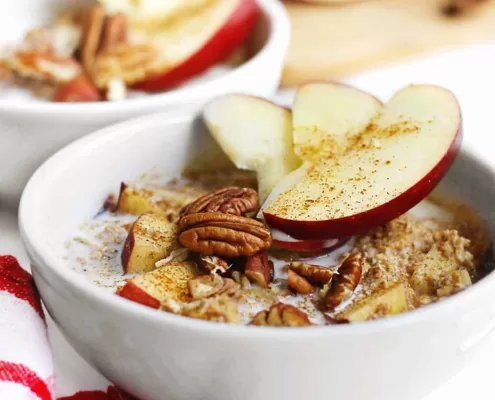
Apple Pie Oats 


Skill Level

Easy

Time

5 mins

Serves

1


Calories

303

Protein

9g

Fat

3g

Carbs

60g

Equipment Needed


Ingredients

  • 1/2 cup Rolled Oats
  • 1/2 cup Milk 1%
  • 1 Apple (chopped)
  • 1 1/2 tsps Maple Syrup
  • 1/4 tsp Cinnamon
  • 1/4 tsp Vanilla Extract

Instructions

Step 1

Mix the chopped apple, maple syrup, cinnamon, and vanilla in a microwave-safe bowl and microwave for 1 minute; or until apple is softened.

Step 2

Add the oats and milk, stir to combine.

Step 3

Microwave for 60-90 seconds.

Step 4

Add your favourite toppings and enjoy!

Notes About Recipe

  • More protein: add 0.5 to 1 scoop of protein powder to this meal, or if you want more calories and more protein use 2-3 tbsp peanut butter
  • Adjust the sweetness by adding more or less maple syrup.
  • Great toppings: nuts, seeds, nut butter, dried fruit, fresh berries.
  • For softer apples, microwave them a bit longer before adding oats.
  • Can be made ahead and reheated for a quick breakfast.
  • Gluten-free if using certified gluten-free oats.

    Affiliate disclosure: this blog contains affiliate links. This means that if you click through a link and make a decision to purchase, we will receive some compensation from the vendor; at no cost to you.


    Want to try new recipes? Input your email below to recieve a weekly email with 1 recipe and nutrition tip; this is a comfortable way to learn more about nutrition and explore new recipes.

    Get Social With Us

    Creatine: Top 10 Questions Answered by a Sports Dietitian

    Creatine: Top 10 Questions Answered by a Sports Dietitian

    As a sports dietitian, few supplements generate as many questions as creatine. It’s one of the most researched supplements in sports nutrition, yet still misunderstood by many athletes, parents, and weekend warriors alike. Whether you’re strength training, chasing a marathon PB, or just looking to feel less drained after workouts, understanding how creatine fits into your performance plan can be a game changer.

    Here are the top 10 questions I get asked about creatine, answered clearly and simply.


    1. What exactly is creatine, and what does it do in the body?

    Creatine is a naturally occurring compound made from amino acids (arginine, glycine, methionine). About 95% of it is stored in your muscles, where it plays a critical role in energy production. During high-intensity exercise like sprinting or weightlifting, creatine helps quickly regenerate ATP (your body’s energy currency).

    Think of it like having an extra energy battery in your muscles. More stored creatine means more fuel for short, explosive bursts of power.


    2. What’s the difference between creatine monohydrate and other forms?

    Creatine monohydrate is the gold standard. It’s the most researched, most effective, and usually the most affordable.

    Other forms like creatine HCL, ethyl ester, or buffered creatine often make claims about better absorption or fewer side effects, but there’s little evidence they outperform monohydrate. Most of them just cost more.

    Unless you’ve had digestive issues with monohydrate, there’s no strong reason to switch.


    3. Is creatine only for bodybuilders or strength athletes?

    Absolutely not. While it’s a staple for lifters, creatine benefits athletes across a wide range of sports.

    If your sport involves sprinting, jumping, change of direction, or repeated efforts (think hockey, soccer, basketball, CrossFit), creatine can enhance performance, support recovery, and help maintain muscle mass over a season.

    Even endurance athletes are starting to use creatine to buffer fatigue, support recovery, and reduce muscle breakdown.

    Beyond sport, creatine offers lifespan-wide benefits:

    • In older adults, it supports muscle preservation, brain health, and mobility.

    • In adolescents, it may enhance muscle development and recovery during intense training.

    • For brain health, emerging evidence supports its role in cognitive function, mood regulation, and even resilience to sleep deprivation.

    So whether you’re a high school athlete, a new mom rebuilding strength, or someone in their 60s trying to stay sharp and mobile, creatine might have a place in your routine.

    4. Is creatine safe? Will it damage my kidneys or liver?

    This is probably the most common concern, and the answer is reassuring: creatine is safe for healthy individuals.

    There are over 1,000 studies on creatine, and none have shown harm to liver or kidney function in healthy people. Elevated creatinine (a blood marker) sometimes confuses things, but that doesn’t reflect kidney damage—just that more creatine is circulating.

    If someone has pre-existing kidney disease, they should speak with their healthcare provider before starting any supplement.


    5. Can creatine help improve endurance performance or recovery?

    Creatine doesn’t improve aerobic capacity directly like VO2 max, but it can help endurance athletes in other important ways:

    • Improved performance in sprint finishes or hills

    • Reduced muscle damage post-exercise

    • Better glycogen storage when taken with carbs

    Marathoners, triathletes, and cyclists who include sprints, tempo runs, or lifting in their training often benefit from creatine.


    6. Should I do a loading phase or just take a maintenance dose?

    There are two main ways to take creatine:

    • Loading phase: 20 grams/day for 5-7 days, split into 4 doses

    • Daily maintenance: 3-5 grams/day consistently

    Both methods work. Loading fills your muscle stores faster (in about a week), while daily dosing takes 3-4 weeks to saturate your muscles. My recommendation: just start taking the maintenance dose, as this is something you should be taking daily (for a long time – there’s no need to cycle on and off); if you have a sensitive gut, it also helps to load slower this way.


    7. What’s the best time to take creatine—before or after workouts?

    The best timing is the one you’ll stick to consistently.

    That said, research suggests post-workout with a meal (especially containing protein and carbs) might help with absorption and muscle recovery.

    But if you’re more likely to remember it in the morning or with lunch, do that. Consistency beats timing.


    8. Do women benefit from creatine supplementation?

    Yes—and arguably even more than men.

    Women generally have lower muscle creatine stores due to smaller muscle mass and lower red meat intake. Supplementation can help close that gap.

    It may also support cognitive function, mood (especially postpartum), and bone and muscle strength through menopause.

    Fun fact: new research is exploring creatine’s potential role during different phases of the menstrual cycle to optimize energy and recovery.


    9. Does creatine cause weight gain or bloating?

    Creatine may cause a small increase in body weight (1-3 lbs) when you first start supplementing, but it’s from water being pulled into muscle cells—not fat.

    Some people feel slightly “puffy” in the first week, especially during a loading phase. But this typically resolves and doesn’t impact appearance or performance.

    Long term, most weight gained from creatine is lean muscle, especially when paired with resistance training.


    10. Are there any people who should not take creatine?

    Creatine is safe for most people. But if you have pre-existing kidney disease, are on dialysis, or have certain neurological conditions, check with your doctor or registered dietitian first.

    It’s also worth noting that not everyone responds the same. Some people (“non-responders”) see less benefit, particularly if they already consume a lot of meat and have high baseline creatine levels.


    Other Questions We Get Asked (Quick Answers)

    Does creatine cause hair loss or affect testosterone?
    No conclusive evidence supports this. One small study suggested a rise in DHT, but follow-ups haven’t confirmed it.

    Is creatine safe for teens and young athletes?
    Yes, when supervised and taken at appropriate doses. Many sports organizations approve it for use in youth athletes.

    Does creatine improve brain function or focus?
    Emerging research shows promise—especially during sleep deprivation or mental fatigue.

    How long does it take to see results from creatine?
    With loading, about a week. Without loading, expect 3-4 weeks of consistent use.

    Do I need to cycle off creatine?
    No. Long-term use is safe in healthy individuals.

    Is creatine beneficial during the menstrual cycle, pregnancy, or menopause?
    Potentially, yes. Low-estrogen states (like the early follicular phase or menopause) may benefit most (but you would supplement with creatine continuously, not just during these times). In pregnancy, research is early but promising (mostly in animal studies).

    Can creatine help with sleep or fatigue?
    It may support mental energy during sleep deprivation, though it doesn’t directly improve sleep quality.


    Final Thoughts from a Sports Dietitian

    Creatine is one of the most effective, safest, and most misunderstood supplements in sport. Whether you’re a power athlete, an endurance runner, or just trying to get more out of your training, it’s worth considering.

    As with any supplement, though, context matters. Your diet, training, and overall goals all affect how useful creatine will be for you.

    If you’re unsure whether it’s the right fit, speak with a registered sports dietitian who can help you decide based on your unique situation. We can help, click here to book your own discovery call to see how we can help.

    Thanks for reading. Here are some other ways we can help:

    Free – see “Free Resources” in website header.

    Paid – see “Work With Us” in website header.

    Social Media: Instagram  I  TikTok  I  Youtube  I Facebook

      Simple Things You Can Do Every Day to Lose Weight (Without Losing Your Mind)

      Simple Things You Can Do Every Day to Lose Weight (Without Losing Your Mind)

      Let’s be honest—if losing weight were as easy as drinking more water or eating less sugar, the whole world would have done it by now.

      You’ve probably tried cutting carbs, skipping meals, or jumping on that “quick fat loss” trend your friend swears by. Maybe you’ve downloaded the app, counted the macros, and swore this time would be different—only to end up feeling frustrated when the results didn’t match the effort.

      As Registered Dietitians who specialize in nutrition coaching for fat loss, we hear this all the time. The truth? Lasting weight loss doesn’t come from extremes—it comes from consistency. And consistency is built on simplicity.

      So today, we’re getting back to basics.

      Here are the simple, evidence-based things you can do every day to support fat loss—no detoxes, gimmicks, or all-or-nothing rules required.


      1. Build Meals Around Protein and Fibre

      Here’s why this combo matters: protein helps preserve muscle mass (which keeps your metabolism humming), and fibre helps you feel full and satisfied.

      Together, they’re like the Batman and Robin of nutrition for fat loss.

      What this looks like:

      • Breakfast: Greek yogurt with berries and chia seeds

      • Lunch: Chicken wrap with whole-grain tortilla and a big handful of spinach

      • Dinner: Salmon, roasted carrots, and quinoa

      • Snack: Hummus with bell peppers, or a boiled egg and an apple

      You don’t need to weigh every gram or log every bite—just ask yourself: “Where’s the protein? Where’s the fibre?” and you’re on the right track.


      2. Stop Eating Meals in ‘Scroll Mode’

      We get it—life is busy. But eating while distracted (scrolling your phone, answering emails, watching TV) can disconnect you from your hunger cues. That’s when it becomes way too easy to overeat without even realizing it.

      Here’s what one of our nutrition coaching clients shared recently:

      “When I started eating lunch without my phone, I noticed I was full earlier. I didn’t even want to finish the whole portion.”

      Simple, right? But powerful.

      Try this: Set a 10-minute timer. Sit down without screens. Chew slowly. Notice how your body feels. You don’t need to “perfect” mindful eating—you just need to practice it more often than not.


      3. Drink Water Before Coffee

      No, coffee isn’t the enemy. We love a good Americano as much as anyone.

      But starting your day with water instead of caffeine supports hydration, digestion, and can help prevent the “is this hunger or thirst?” guessing game later.

      Try this: Keep a glass or bottle of water by your bed. Drink it first thing in the morning. You’re already ahead of the game—and your digestion will thank you.


      4. Go for a Walk After One Meal a Day

      This tip supports blood sugar balance, digestion, and energy—all of which support your fat loss goals. Plus, it feels good.

      We’re not talking about 10,000 steps or a new cardio routine. We’re talking 10–15 minutes of light movement after one meal.

      It could be walking the dog, doing dishes while standing, or taking a stroll around the block.

      Not only does this help with insulin sensitivity (which impacts fat storage), but it’s a powerful mental reset too—especially if you tend to crave sweets or snacks right after eating.


      5. Keep It Boring… Until It’s Not

      We love food variety. But when you’re trying to lose weight, decision fatigue can derail your momentum fast.

      One of the most underrated tools in your toolbox? Meal repetition.

      Eating the same or similar meals for breakfast and lunch throughout the week gives your brain a break. It also helps you stay consistent, reduces the temptation to “grab something quick,” and makes grocery shopping easier.

      Save the creativity for dinner or the weekend. Consistency > novelty.


      6. Create a “Default Snack” That Supports Your Goals

      Snacks aren’t bad. But when every snack is a mystery—chips one day, cookies the next—it’s easy to overshoot your needs.

      Instead, build yourself a default snack that’s:

      • High in protein

      • High in fibre

      • Satisfying enough to tide you over for 2–3 hours

      Examples:

      • A cheese stick with an apple

      • Cottage cheese with berries

      • Hard-boiled eggs and a handful of almonds

      • A protein bar that doesn’t taste like cardboard (yes, we have faves!)

      When you’re not sure what to eat, go with the default. It keeps you out of the pantry spiral and supports your goals.


      7. Sleep Like It’s Your Job

      This one’s not sexy, but it’s arguably one of the most important things you can do to lose weight and keep it off.

      When you’re sleep-deprived, two things happen:

      • Your hunger hormone (ghrelin) goes up

      • Your fullness hormone (leptin) goes down

      Translation? You’re hungrier and less satisfied. And probably craving carbs.

      Aim for 7–9 hours. Create a calming nighttime routine (no scrolling in bed). And remind yourself that nutrition for fat loss doesn’t work if your body’s running on empty.


      8. Think Addition, Not Subtraction

      Most people approach weight loss like a math problem:

      What can I cut?

      But restriction leads to rebellion. You can only white-knuckle your way through a bland diet for so long before your brain begs for a binge.

      Instead, flip the script.

      Ask: “What can I add?”

      • Add a handful of vegetables to your lunch

      • Add protein to your breakfast

      • Add one more glass of water during your day

      • Add 10 minutes of fresh air

      Adding keeps you focused on growth. Subtracting keeps you stuck in scarcity. And your results reflect that mindset.


      9. Let Go of ‘Perfect Days’

      Spoiler alert: You don’t need to eat perfectly to lose weight.

      You just need to eat well enough, often enough—and stay in the game long enough to see the results.

      We tell all of our nutrition coaching clients this:

      One off day doesn’t ruin your progress. But all-or-nothing thinking might.

      Success isn’t about flawless meals. It’s about building a rhythm that’s flexible, sustainable, and forgiving.

      So yes, eat the burger. Enjoy the birthday cake. Take the vacation. Just return to your habits, without shame, when it’s over.


      10. Get Support That Doesn’t Judge You

      Trying to navigate fat loss alone can be overwhelming. Especially when the internet is shouting a thousand conflicting messages.

      What you need isn’t more rules.

      You need a plan that fits your life. You need someone who will help you adjust that plan without guilt when things get busy, messy, or real.

      That’s where Registered Dietitians come in.

      At Leverage Nutrition, our nutrition coaching isn’t about perfection—it’s about partnership. We help you build sustainable habits that support fat loss, without sacrificing the foods you love or the life you enjoy.


      Final Thoughts: Simplicity Wins

      You don’t need a 30-day cleanse. You don’t need a complete kitchen overhaul. You don’t need to cut out your favorite foods.

      You just need small, simple habits that move you closer to your goals—day by day, choice by choice.

      If you’re tired of starting over, frustrated with fad diets, or ready for a real plan that works for your real life, we’re here to help.

      Ready to take the next step?
      Let’s chat about how we can help support you through personalized nutrition for fat loss that finally sticks. Book a free call and let’s chat about how we can make your goals a reality—one simple habit at a time.