
How Sleep and Stress Impact Fat Loss (More Than You’d Think)

How Sleep and Stress Impact Fat Loss (More Than You’d Think)

When most people think about fat loss, they focus on two things: diet and exercise. Calories, protein intake, workouts, and step counts often get the most attention.

But two factors that are frequently overlooked can have just as much influence on progress: sleep and stress.

You can follow a well-structured nutrition plan and train consistently, yet still struggle to lose fat if sleep is poor and stress levels stay high. Understanding how these factors affect the body can help explain why progress sometimes feels harder than expected.


Why Sleep Matters for Fat Loss

Sleep is not just about feeling rested. It plays a major role in regulating hormones, appetite, energy levels, and recovery.

When sleep is consistently short or disrupted, the body responds in ways that make fat loss more difficult.

Sleep Affects Hunger Hormones

Two hormones that help regulate appetite are leptin and ghrelin. Leptin signals fullness, while ghrelin signals hunger.

When sleep is limited, leptin tends to decrease while ghrelin increases. This combination often leads to stronger hunger signals and reduced feelings of fullness after eating.

Many people notice this pattern firsthand. After a poor night of sleep, cravings for higher calorie foods tend to increase. Foods rich in sugar and fat often become more appealing, which can make it harder to stay aligned with nutrition goals.


Sleep Influences Energy and Decision-Making

Lack of sleep does not just affect appetite. It also affects motivation and decision-making.

Imagine two different mornings. After a full night of sleep, preparing a balanced breakfast or going for a walk feels manageable. After a short night of sleep, energy is lower and convenience becomes more appealing.

One client once described this difference clearly. When she slept well, she followed her nutrition plan almost automatically. When she slept poorly, she found herself reaching for snacks simply to stay alert through the afternoon.

Over time, these small decisions can significantly influence fat loss progress.


Sleep Supports Recovery and Training Performance

Exercise is an important part of maintaining muscle during fat loss. Sleep plays a key role in recovery from training.

Without adequate sleep, workout performance often declines. Strength and endurance may drop, which can make it harder to maintain consistent training habits.

When sleep improves, workouts tend to feel easier and energy expenditure increases naturally.


How Stress Affects Fat Loss

Stress is a natural part of life, but chronic stress can create challenges for fat loss.

When the body experiences stress, it releases hormones such as cortisol. Cortisol is not inherently harmful, but prolonged elevation can influence appetite, cravings, and water retention.


Stress Can Increase Cravings

Many people notice that stressful days lead to different food choices. High stress often increases the desire for foods that are quick, comforting, and high in calories.

This is not a lack of discipline. It is a biological response. The body seeks easily available energy during stressful situations.


Stress Can Lead to Emotional Eating

Food can sometimes become a coping mechanism for stress. This does not mean someone lacks willpower. It simply means the brain associates certain foods with temporary relief or comfort.

One client explained that her eating habits were consistent during calm weeks, but during periods of work stress she noticed more evening snacking. Once she began managing stress through short walks and better sleep routines, those habits gradually improved without major dietary changes.


Stress Can Mask Fat Loss on the Scale

Stress can also affect body weight through fluid retention. Even when fat loss is occurring, the scale may appear unchanged due to temporary shifts in water balance.

This can be discouraging if someone believes their efforts are not working, even though progress may still be happening beneath the surface.


Small Changes That Improve Sleep and Stress

Improving sleep and stress management does not require dramatic lifestyle changes. Often, small adjustments can make a noticeable difference.

Helpful strategies include:

  • Maintaining a consistent sleep schedule

  • Limiting screens before bedtime

  • Getting natural light early in the day

  • Including short walks or light activity to reduce stress

  • Practicing simple relaxation techniques such as deep breathing

These habits support overall health and make nutrition and exercise habits easier to maintain.


The Bigger Picture

Fat loss is influenced by many factors working together. Nutrition and exercise remain important, but sleep and stress often shape how effective those strategies become.

When sleep improves, hunger regulation, energy levels, and training performance tend to improve as well. When stress is managed, cravings and emotional eating often decrease.

The result is not just better fat loss progress, but a healthier and more sustainable lifestyle overall.


The Takeaway

Sleep and stress may not receive as much attention as diet or exercise, but their impact on fat loss can be significant.

Prioritizing sleep, managing stress, and maintaining balanced habits creates an environment where fat loss becomes easier rather than harder.

Sometimes the most effective strategy is not pushing harder with food or exercise. It is supporting the body in ways that allow those efforts to work better.
Thanks for reading. Here are some other ways we can help:

Free – see “Free Resources” in website header.

Paid – see “Work With Us” in website header.

Social Media: Instagram  I  TikTok  I  Youtube  I Facebook


Are There Any Real “Fat-Burning” Foods? A Dietitian’s Honest Take

Are There Any Real “Fat-Burning” Foods? A Dietitian’s Honest Take

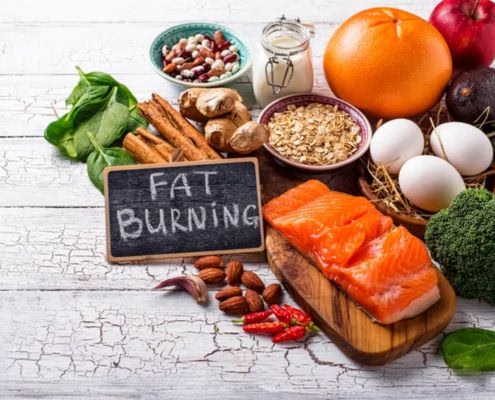
Walk through any grocery store or scroll through social media and you will quickly see claims about “fat-burning foods.” Grapefruit diets, spicy foods that melt fat, green tea that boosts metabolism, and lists of foods that supposedly help you burn calories faster.

These ideas are appealing. The thought that certain foods could accelerate fat loss without changing anything else sounds almost too good to be true.

And in most cases, it is.

The reality is that fat loss does not come from a specific food or ingredient. It comes from the overall balance of calories consumed and calories burned. That does not mean certain foods cannot support fat loss, but it does mean the concept of a magical fat-burning food is often misunderstood.

Let’s look at what the science actually says.


Why the Idea of Fat-Burning Foods Is So Popular

Fat loss can feel complicated. People are often juggling busy schedules, social events, work stress, and inconsistent routines. When progress slows, the search for shortcuts begins.

Foods marketed as fat burners offer a simple promise. Add this one item to your routine and results will appear faster.

One client once told us she started eating grapefruit every morning because she heard it “burned fat.” After a few weeks she felt discouraged because nothing changed. The grapefruit itself was never the issue. The problem was expecting one food to do the work of an entire lifestyle.

Fat loss is driven by patterns, not single ingredients.


Foods That Are Often Called “Fat Burners”

There are a few foods and beverages that frequently appear on fat-burning lists. Some have small metabolic effects, but the impact is usually modest.

Caffeine and Coffee

Caffeine can temporarily increase metabolic rate and improve exercise performance. This is why many fat loss supplements contain caffeine.

However, the increase in calorie burn is small. Coffee alone will not create meaningful fat loss unless it helps support an overall calorie deficit through increased activity or appetite control.


Green Tea

Green tea contains compounds called catechins that may slightly increase fat oxidation. Some studies show small improvements in energy expenditure.

In practice, the effect is minor. Drinking green tea can be part of a healthy routine, but it will not dramatically change fat loss outcomes.


Spicy Foods

Capsaicin, the compound that gives chili peppers their heat, can slightly increase thermogenesis. This means the body may burn a small number of additional calories after eating spicy food.

The key word here is small. The effect is measurable in research but not large enough to drive fat loss on its own.


High Protein Foods

Protein is sometimes labeled as fat burning because it has a higher thermic effect of food. The body uses more energy to digest protein compared with carbohydrates or fat.

Protein also helps maintain muscle and supports fullness, which can indirectly help reduce calorie intake.

Unlike many other so-called fat burners, increasing protein intake actually plays a meaningful role in supporting fat loss.


The Bigger Picture: Why Food Quality Still Matters

Even though there are no magical fat-burning foods, the types of foods you eat still influence fat loss.

Certain foods make it easier to maintain a calorie deficit without feeling constantly hungry.

Foods that tend to support fat loss include:

  • Protein-rich foods such as eggs, poultry, fish, and yogurt

  • Fibre-rich foods such as vegetables, fruit, beans, and whole grains

  • Whole foods that are filling relative to their calorie content

These foods do not burn fat directly, but they help control hunger and support consistent eating habits.

One client described this shift perfectly. She initially focused on finding “metabolism-boosting foods.” Once she began prioritizing protein and vegetables at meals, she naturally ate less and started seeing progress without feeling deprived.


Why the Overall Diet Matters More Than Any Single Food

Fat loss occurs when calorie intake stays below calorie expenditure over time. No single food can override this principle.

Instead of asking whether a food burns fat, it is more helpful to ask whether that food helps you maintain habits that support a calorie deficit.

A balanced eating pattern built around nutrient-dense foods will have a far greater impact than adding one “special” ingredient.


A Practical Way to Think About Fat Loss Foods

Rather than searching for fat-burning foods, focus on foods that make fat loss easier.

Look for foods that:

  • Help you feel full after meals

  • Provide protein and fibre

  • Support energy for movement and exercise

  • Fit into your lifestyle consistently

When meals are built around these principles, fat loss becomes more predictable and sustainable.


The Honest Take

There are no foods that magically burn fat. Some ingredients may slightly increase metabolism, but the effects are small compared with the impact of overall eating habits.

The most powerful strategy is not adding a single fat-burning food. It is building meals that support fullness, consistency, and balanced nutrition.

Fat loss is rarely about one ingredient. It is about patterns that work day after day.

Thanks for reading. Here are some other ways we can help:

Free – see “Free Resources” in website header.

Paid – see “Work With Us” in website header.

Social Media: Instagram  I  TikTok  I  Youtube  I Facebook


Do You Need to Track Calories to Lose Fat? Not Always: Here’s When You Should

Do You Need to Track Calories to Lose Fat? Not Always: Here’s When You Should

Calorie tracking has become one of the most popular tools for fat loss. Apps make it easy to log food, scan barcodes, and monitor progress in real time. For some people, tracking calories feels empowering and structured. For others, it feels exhausting and unsustainable.

So the real question is not whether calorie tracking works. It does. The better question is whether you need to track calories to lose fat.

The short answer is no, not always. But there are situations where tracking can make a meaningful difference.

Let’s break down when calorie tracking helps, when it may not be necessary, and how to decide what fits your goals.


Why Calorie Tracking Works

Fat loss requires a calorie deficit. This means consistently eating fewer calories than your body burns. Tracking calories increases awareness and reduces guesswork.

Many people underestimate portion sizes. A spoonful of peanut butter becomes two. A splash of oil becomes a tablespoon. Snacks throughout the day add up quietly.

One client believed she was eating around 1,800 calories per day. After tracking for one week, she realized her intake was closer to 2,300. There was no lack of effort. There was simply a lack of awareness.

Tracking brought clarity. With small adjustments, fat loss resumed.

Calorie tracking removes assumptions and replaces them with data.


When You Do Not Need to Track Calories

Tracking is a tool, not a requirement.

Many people lose fat successfully by focusing on habits instead of numbers. If someone consistently eats balanced meals with adequate protein, vegetables, fruit, and whole foods, portion control often happens naturally.

You may not need to track calories if:

  • You prefer structure through routines rather than numbers

  • You are already seeing steady progress

  • You have strong hunger awareness

  • You feel stressed or overly focused on food when tracking

For some individuals, tracking can increase food obsession and reduce enjoyment of meals. In these cases, habit-based strategies are often more sustainable.

Strategies that can work without tracking include:

  • Building meals around protein

  • Filling half your plate with vegetables

  • Limiting liquid calories

  • Reducing late-night snacking

  • Increasing daily movement

These approaches can create a calorie deficit without logging every bite.


When You Should Consider Tracking Calories

While tracking is not required for everyone, there are specific situations where it becomes valuable.

1. You Are Stuck in a Fat Loss Plateau

If progress has stalled for several weeks, tracking calories for a short period can identify hidden sources of excess intake.

This does not mean tracking forever. Even one to two weeks of consistent logging can reveal patterns.


2. You Feel Like You Are “Doing Everything Right”

Sometimes effort is high but results are low. Tracking provides objective feedback.

One client insisted she rarely snacked. After logging her food, she realized she was grazing while preparing meals and grabbing small bites throughout the day. These small additions added several hundred calories.

Tracking turned vague habits into visible data.


3. You Have a Specific, Time-Sensitive Goal

If you are preparing for an event, competition, or milestone, tracking calories increases precision. It allows for small adjustments that speed up progress while preserving muscle and energy.


4. You Want to Learn Portion Awareness

Tracking can be educational. After a few weeks, many people develop a better understanding of portion sizes and calorie density. Once this awareness improves, some choose to stop tracking and maintain results without logging.


The Downsides of Calorie Tracking

Tracking is not perfect.

It can feel tedious. It can be inaccurate if foods are estimated. It can become stressful if numbers are treated as rigid rules instead of flexible targets.

The goal of tracking is awareness, not perfection.

If tracking causes anxiety, obsession, or a negative relationship with food, it may not be the right strategy. Fat loss should support overall health, including mental well-being.


A Balanced Approach

Instead of asking whether calorie tracking is required, a better question is whether it is useful for you right now.

For some people, tracking is a temporary learning phase. For others, it is a long-term strategy. For many, it is unnecessary once foundational habits are strong.

Fat loss ultimately comes from consistency. Whether you track calories or not, the principles remain the same:

  • Maintain a calorie deficit

  • Prioritize protein

  • Eat fibre-rich foods

  • Strength train

  • Stay active

Tracking is simply one way to measure progress along the way.


The Bottom Line

You do not always need to track calories to lose fat. Many people succeed through structured habits and balanced eating. However, calorie tracking can be a powerful tool when progress stalls, awareness is low, or goals require precision.

The best fat loss strategy is not the most detailed or restrictive. It is the one that fits your lifestyle and helps you stay consistent over time. If tracking supports that consistency, use it. If it does not, build habits that achieve the same outcome.

Thanks for reading. Here are some other ways we can help:

Free – see “Free Resources” in website header.

Paid – see “Work With Us” in website header.

Social Media: Instagram  I  TikTok  I  Youtube  I Facebook


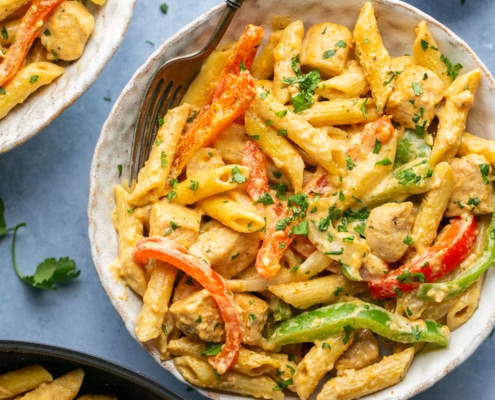
Recipe: Creamy Chicken Fajita Pasta Bake

Recipe: Creamy Chicken Fajita Pasta Bake

Creamy Chicken Fajita Pasta Bake 


Skill Level

Easy

Time

50 mins

Serves

2


Calories

690

Protein

56g

Fat

30g

Carbs

54g

Equipment Needed

  • Oven-safe dish


Ingredients

  • 100g pasta of choice (dry weight)
  • 325g chicken breast
  • 40g grated mozzarella/Cheddar
  • ½ onion
  • 1 pepper
  • 100g low-fat cream cheese
  • 1 Fresh Garlic (diced)
  • 2tbsp fajita seasoning packet
  • 1 tin (200g) chopped tomatoes
  • 100mls of Water

Instructions

Step 1

Preheat the oven to 375°F.

Step 2

Dice the chicken, onion, and pepper then add all of the ingredients, except the Mozzarella/Cheddar to a large oven-safe dish.

Step 3

Rinse the chopped tomato tin with 100ml water, add it to the dish, and mix well.

Step 4

Top the dish with the mozzarella then cover with tin foil, and bake for 45 minutes covered then 5 minutes uncovered.

Step 5

Leave to rest for 5–10 minutes before serving. Enjoy!

Notes About Recipe

  • Use any pasta shape you like (penne, fusilli, shells all work well).

  • Low-fat cream cheese keeps it creamy without being too heavy.

  • Keep covered for most of the bake to prevent drying out.

  • Remove foil at the end to melt and lightly brown the cheese.

  • Let sit 5 minutes before serving to thicken the sauce.

  • Stores well in the fridge for 2–3 days; great for leftovers.

    Affiliate disclosure: this blog contains affiliate links. This means that if you click through a link and make a decision to purchase, we will receive some compensation from the vendor; at no cost to you.

    Get Social With Us

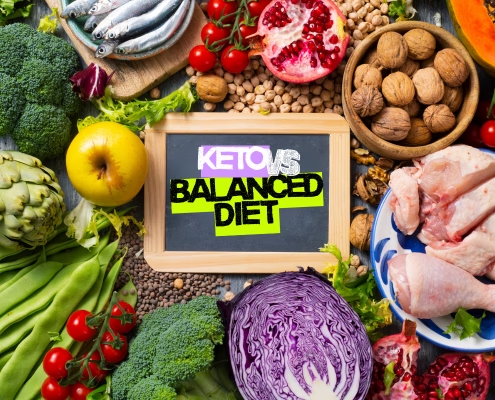
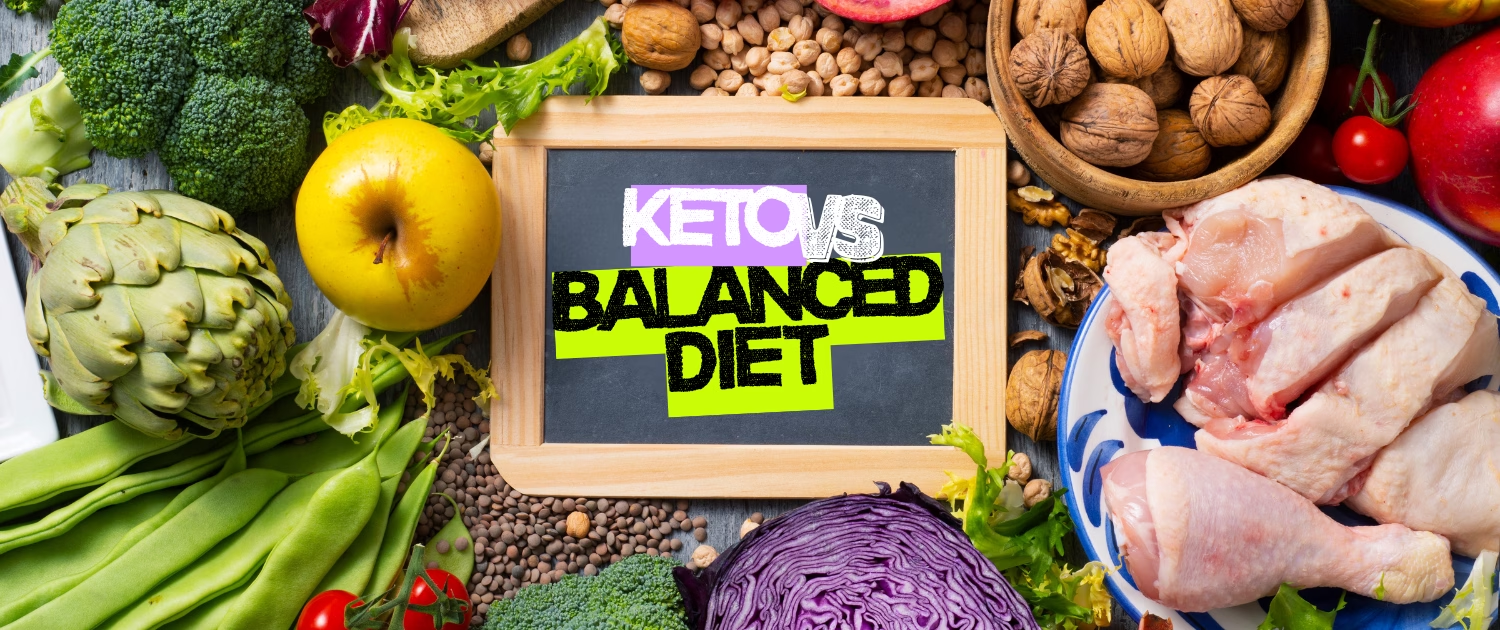
    Keto vs. Balanced Eating: What’s Actually Better for Long-Term Fat Loss?

    Keto vs. Balanced Eating: What’s Actually Better for Long-Term Fat Loss?

    Few nutrition topics spark more debate than keto versus balanced eating. Keto is often promoted as the fastest way to burn fat, control hunger, and simplify decisions. Balanced eating, on the other hand, is sometimes dismissed as too flexible or not “serious enough” for fat loss.

    The truth is more nuanced. Both approaches can lead to fat loss, but they do not work the same way, and they are not equally effective for long-term results.

    Understanding how each approach works helps explain why some people swear by keto while others regain weight the moment they stop.


    What the Keto Diet Is Designed to Do

    The ketogenic diet is a very low carbohydrate, high fat approach that pushes the body into ketosis. In this state, the body relies more heavily on fat and ketones for fuel rather than carbohydrates.

    Keto often leads to rapid initial weight loss. Much of this early change comes from water loss due to reduced carbohydrate intake and depleted glycogen stores. This can feel motivating and convincing.

    Some people also experience appetite suppression on keto. Fewer food choices, higher fat intake, and stable blood sugar can make it easier to eat less without consciously tracking calories.

    For certain individuals, especially those who prefer rigid rules and minimal food variety, keto can feel straightforward and manageable in the short term.


    Where Keto Often Breaks Down

    While keto can produce short-term fat loss, challenges tend to appear over time.

    Food Restriction Increases Mental Load

    Eliminating most carbohydrates means avoiding fruits, grains, legumes, and many social foods. This restriction can make eating out, traveling, or attending social events stressful.

    One client described feeling successful during the week but anxious on weekends. Eventually, social situations became exhausting, and the diet felt isolating.


    Adherence Is the Biggest Limiting Factor

    Research consistently shows that fat loss success depends more on adherence than diet type. Many people struggle to stay on keto long term. When carbohydrates are reintroduced, weight regain is common, especially if habits around portion control and balanced meals were never developed.


    Performance and Energy Can Suffer

    Some people feel great on keto. Others notice decreased workout performance, slower recovery, or low energy, particularly during higher-intensity training. For active individuals, athletes, or those who enjoy strength training, this can limit progress and consistency.


    What Balanced Eating Actually Looks Like

    Balanced eating is not “eating everything all the time.” It focuses on consistent meals built around protein, vegetables or fruit, carbohydrates, and fats in proportions that support energy and satiety.

    This approach allows flexibility while still creating a calorie deficit when fat loss is the goal.

    Balanced eating emphasizes:

    • Adequate protein to preserve muscle

    • Carbohydrates to support training and daily energy

    • Fibre-rich foods for fullness and digestion

    • Healthy fats for flavour and satisfaction

    Instead of strict rules, decisions are guided by structure.


    Why Balanced Eating Often Wins for Long-Term Fat Loss

    It Teaches Transferable Skills

    Balanced eating helps people learn how to portion meals, manage hunger, and make adjustments based on real life. These skills carry over to vacations, holidays, and busy periods.

    A client once said balanced eating felt “less exciting” at first, but months later she realized she no longer needed a reset after every social event. Progress continued without extremes.


    It Supports Training and Recovery

    Carbohydrates play a key role in fueling workouts and recovery. When training quality improves, muscle is preserved, energy expenditure increases, and fat loss becomes more sustainable.


    Flexibility Reduces Rebound Weight Gain

    Because no foods are completely off-limits, balanced eating reduces the risk of binge-restrict cycles. This makes it easier to maintain results once the fat loss phase ends.


    Fat Loss Comes Down to Calories, Not Carb Elimination

    Both keto and balanced eating can create a calorie deficit. Keto often does this indirectly by limiting food options. Balanced eating does it through portion control and food quality.

    Neither diet has a metabolic advantage when calories and protein are matched. The deciding factor is which approach you can maintain consistently.


    Who Might Do Well on Keto

    Keto may be a reasonable short-term option for people who:

    • Prefer strict structure

    • Have low training demands

    • Feel less hungry with very low carbohydrate intake

    • Are comfortable with limited food variety

    However, it works best when treated as a temporary strategy rather than a lifelong solution.


    Who Usually Thrives with Balanced Eating

    Balanced eating tends to work better for people who:

    • Want long-term fat loss without repeated resets

    • Enjoy social eating and variety

    • Train regularly or value performance

    • Want a plan that adapts to real life

    For most people, this approach supports consistency, flexibility, and sustainable results.


    So, Which Is Better for Long-Term Fat Loss?

    Keto can work, but it is not inherently superior. Balanced eating tends to win for long-term fat loss because it teaches skills, supports performance, and fits into everyday life.

    The best diet is not the one that produces the fastest drop on the scale. It is the one you can follow consistently without feeling trapped, restricted, or burned out.

    Long-term fat loss is built on habits you can repeat, not rules you eventually abandon.

    Thanks for reading. Here are some other ways we can help:

    Free – see “Free Resources” in website header.

    Paid – see “Work With Us” in website header.

    Social Media: Instagram  I  TikTok  I  Youtube  I Facebook