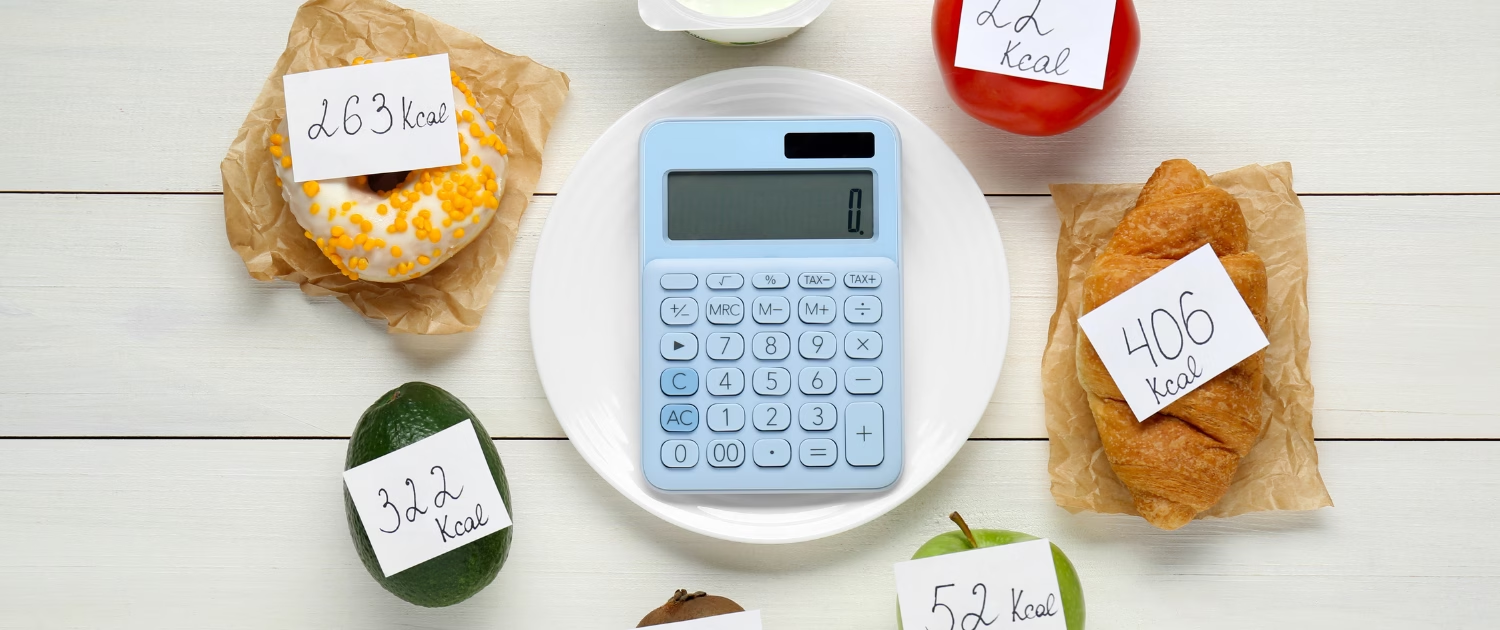
Most people start a fat loss journey with one big question: “How many calories should I eat to lose weight?”
It’s a fair question — and one that’s often overcomplicated by apps, influencers, and online calculators giving wildly different answers.
The truth is, finding your calorie target doesn’t have to feel like solving a math problem. Once you understand a few simple principles, you can estimate your needs with surprising accuracy and adjust based on your real-world results.
Let’s walk through how to calculate your calorie target for fat loss — in a way that’s simple, practical, and effective.
Step 1: Find Your Maintenance Calories
Before you can set a calorie deficit, you first need to know roughly how many calories your body uses to maintain your current weight.
This is often called your maintenance level or Total Daily Energy Expenditure (TDEE) — the number of calories you burn each day through all activities, including resting metabolism, daily movement, exercise, and even digestion.
There are detailed formulas like the Mifflin-St Jeor or Harris-Benedict equations, but most people don’t need that level of precision to get started. A simpler way is to multiply your body weight in pounds by one of the following factors:
| Activity Level | Description | Multiplier |
|---|---|---|
| Sedentary | Little to no exercise | 13–14 |
| Lightly active | 1–3 workouts per week | 14–15 |
| Moderately active | 3–5 workouts per week | 15–16 |
| Very active | 5+ intense workouts or highly physical job | 16–18 |
Example:
Let’s say someone weighs 180 pounds and works out three times a week.
180 × 15 = 2,700 calories (estimated maintenance).
Step 2: Create a Calorie Deficit
To lose body fat, we need to consistently eat fewer calories than our body burns. This creates an energy deficit that forces the body to use stored fat for energy.
A good starting point is a 15–25% calorie deficit from your maintenance level.
Using our earlier example:
-
2,700 calories (maintenance)
-
20% deficit = 540 calories
-
2,700 – 540 = ~2,160 calories per day for fat loss
This moderate deficit tends to produce steady, sustainable fat loss of around 0.5–1% of body weight per week for most people.
Step 3: Track and Adjust
Here’s where many people go wrong — they calculate once, then stick with that number forever.
Your calorie needs aren’t static. As your body weight changes or your activity level fluctuates, your calorie requirements shift too. Instead of expecting perfection from the start, think of your calorie target as a starting estimate.
Use your progress as feedback:
-
If your weight isn’t changing after 2–3 weeks, lower your intake slightly (by ~150–200 calories per day).
-
If you’re losing faster than 1% per week and feeling tired or hungry all the time, add back 100–200 calories.
This data-driven approach ensures your plan adapts to your body, rather than forcing your body to fit a rigid plan.
Step 4: Remember — Calories Are the Foundation, Not the Whole Story
Calories determine whether you lose weight. But the quality of those calories determines how you feel, perform, and sustain results long term.
To make your calorie target actually work:
-
Prioritize protein at each meal to preserve muscle and manage hunger
-
Choose high-fibre foods like vegetables, fruits, and whole grains for fullness
-
Include healthy fats (nuts, seeds, olive oil, avocado) for satiety and hormone health
-
Keep carbohydrates around workouts for better energy and recovery
When these fundamentals are in place, your calorie target becomes a powerful tool rather than a restrictive rule.
Step 5: Be Patient and Consistent
Fat loss isn’t linear. Some weeks you’ll see bigger drops, others will feel like nothing’s happening. That’s normal.
What matters most is the overall trend — and whether your daily habits align with your goals.
Think of your calorie target as a compass, not a cage. It guides your direction, but you still steer the ship.
By keeping things simple, tracking progress, and making small adjustments along the way, you’ll find that fat loss doesn’t require extreme diets or starvation — just structure, patience, and consistency.
Key Takeaways
-
Start by estimating your maintenance calories using body weight × activity multiplier.
-
Reduce calories by 15–25% for a sustainable fat loss rate.
-
Adjust based on real-world results every few weeks.
-
Focus on nutrient quality and balanced meals for long-term success.
In short:
The simple way to calculate your calorie target for fat loss is to start with a realistic estimate, create a modest deficit, and adjust as you go. Fat loss isn’t about eating as little as possible — it’s about fueling your body smartly so that progress feels sustainable, not miserable.
Thanks for reading. Need some help with your nutrition? Click here to book a quick 15-minute call to have a quick chat about how we can help.
Connect with us on Social Media: Instagram I TikTok I Youtube I Facebook