
Sports Nutrition
Fuelling, recovery, hydration, and game-day strategy — built around your actual training and competition schedule. Trusted by AAA hockey programs and individual athletes.
Explore services
Registered Dietitian · Edmonton & online
One-on-one nutrition from a Registered Dietitian — for fat loss, sports performance, and health that holds up long after the diet would have ended.
Teams & organizations we've worked with




Where we do our best work
Most people arrive wanting one of two things: to perform better, or to change their body composition. The third card is the part nobody expects.
Fuelling, recovery, hydration, and game-day strategy — built around your actual training and competition schedule. Trusted by AAA hockey programs and individual athletes.
Explore services
Lose fat, keep muscle, and stop the cycle of restarting every January. Practical targets and habits instead of rigid meal plans you'll abandon by week three.
Explore servicesDietitian services sit under most extended health plans — the same place your massage and physio coverage lives. Many clients use it and pay nothing.
Check coverage & pricingWhy clients pick us
01
Registered Dietitian is a protected title. It means an accredited degree, supervised practice, and ongoing accountability to the College of Dietitians of Alberta. "Nutritionist" carries none of that.
02
Mike is a Registered Dietitian who also writes training programs. Your nutrition gets built around what you're actually doing in the gym or on the ice, not in isolation from it.
03
Where your plan allows it, we bill your insurer directly. No paying up front and waiting on a reimbursement that may or may not land. We direct bill Alberta Blue Cross, Sun Life, Medavie Blue Cross and GreenShield, plus insurers on the Telus Health eClaims network including Canada Life, Desjardins and Manulife.
04
In person through partner clinics in Sherwood Park and Athabasca, or virtually across eight provinces and three territories. Same dietitian either way.
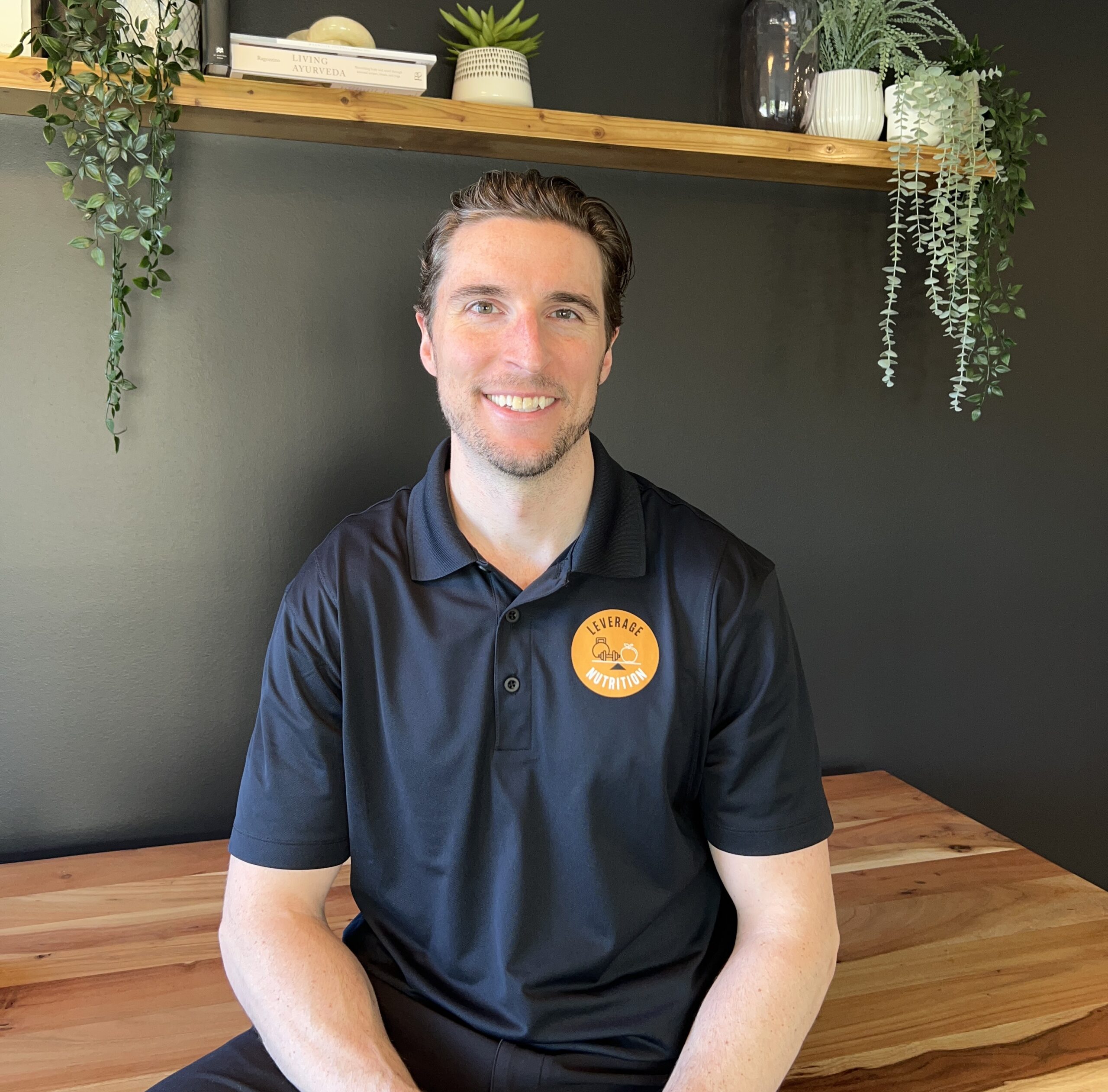
Meet your dietitian
I started Leverage Nutrition because most people don't need more nutrition information — they need someone to work out which parts apply to them, and then help them hold it together when life gets busy.
No extreme protocols, no foods you're not allowed to eat. We find the two or three changes that move the needle for you, make them fit your week, and build from there.
In their words
As a Personal Trainer I know nutrition decently well, but not to the extent that Mike does. His expertise, knowledge, and nutrition coaching are levels beyond what I'm able to provide for my clients, so I always recommend my clients work with him. And, his services are often covered by benefits so my clients don't have to pay extra. Win-Win. All my clients I've sent his way have only said good things about him. Highly recommend.Chris SharkeyOwner, Shark Bodies Fitness
I've had Mike work with me for just over a year now, and he's been a key part of my coaching team and helping my hockey athletes ensure their maximum potential. Mike's presentations were exceptional, delivering clear and practical messages that resonated with our athletes. He simplified complex concepts, making it easy for our players to adopt the recommended dietary strategies. I look forward to continuing working with Mike.Nick LetendreU17AAA Head Coach, South Side Athletic Club
How it works
No commitment on the first call. It exists so you can find out whether this is a fit and what your coverage looks like before you spend anything.
Step 01
A short call to hear what you're working on, answer questions, and point you to what your benefits plan likely covers.
Step 02
A full assessment of your eating patterns, training, health history, and goals. This is where the real work starts.
Step 03
Clear targets and a handful of changes chosen for your schedule — not a meal plan you'll be sick of by Thursday.
Step 04
Regular check-ins to adjust as your training, appetite, and life change. Progress comes from the adjusting.
Questions
Many extended health benefit plans do. Coverage varies by provider and plan, but a lot of clients are able to use their benefits to cover some or all of their sessions. Check your plan for "Registered Dietitian" — it's usually grouped with paramedical services alongside massage and physiotherapy.
We direct bill Alberta Blue Cross, Sun Life, Medavie Blue Cross and GreenShield, plus insurers on the Telus Health eClaims network including Canada Life, Desjardins and Manulife. The list is not exhaustive — Telus Health eClaims covers additional insurers. If yours is not listed, ask and we will check it before your first appointment. Where direct billing is not available, we provide a receipt you can submit for reimbursement.
No. You can book directly. Some benefit plans ask for a referral before they'll reimburse, so it's worth checking yours.
Yes. Virtual appointments are how most clients work with us. We're licensed to serve clients in Alberta, Saskatchewan, Manitoba, New Brunswick, Nova Scotia, Prince Edward Island, Newfoundland & Labrador, Yukon, Northwest Territories, and Nunavut.
A comprehensive nutrition assessment. We go through your current eating habits, lifestyle, health history, training, and goals, then build a personalized strategy from what we find.
We do, but as a teaching tool rather than something to follow to the letter. The focus is on food choices, portioning, meal ideas, and habits that survive a busy week — because a plan you abandon isn't a plan.
It depends on your goals and your coverage. Some clients meet monthly; others want more frequent check-ins for accountability. We'll suggest a cadence on the first call and adjust as you go.
A wide range — people looking to:
No. We work with athletes and sports teams, but plenty of clients are everyday people with no interest in competing — they just want to eat better and feel better.
Registered Dietitians are regulated healthcare professionals: accredited university training, supervised practice, licensing, and ongoing accountability to a provincial college. "Nutritionist" isn't a protected title in most of Canada, so anyone can use it.
Ready when you are
The discovery call is free and there's nothing to prepare. Bring your questions and we'll tell you honestly whether we're the right fit.